
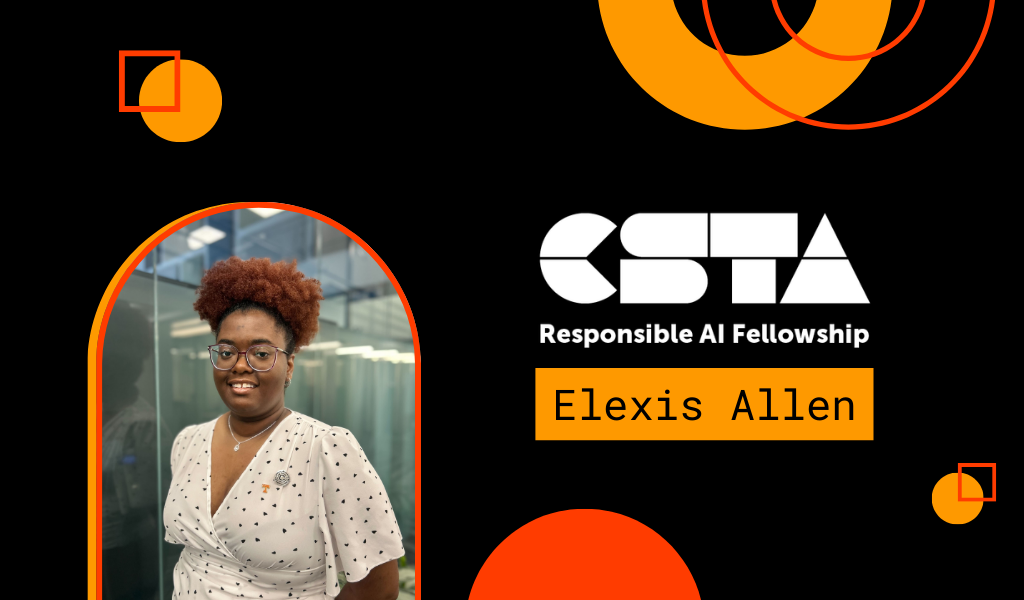
Elexis Allen is a computer science instructor at CodeCrew in Memphis, TN. With a background in biomedical engineering and data science, she integrates AI, technology, and medical device knowledge into K–12 programming and software development curricula to design health-centered and innovative learning experiences. Elexis also created Healthy Bytes, a program that bridges computer science and physical therapy through hands-on applications in coding, biomechanics, AI, and data analysis. She earned her master’s degree in data science from Eastern University, specializing in computational modeling and machine learning.
In Elexis’s experience, the best way to teach AI is to connect it to topics that students already understand. That real-world connection enables them to understand and engage with concepts that might otherwise feel too abstract. Her own work is a great example: Healthy Bytes combines her professional background in computer science, her enthusiasm for education, and her personal interest in subjects relating to health and wellness. By anchoring technology learning in students’ everyday experiences, educators in all different subject areas can increase participation, engagement, and enthusiasm.
Elexis has seen this happen firsthand in her Healthy Bytes program, which introduces physical therapy and computer science concepts to middle and high school students. In one lesson, students used AI models to analyze nutritional labels and identify the amount of sugar in different foods. Many students had never even interacted with AI, but this lesson enabled them to instantly connect coding to the real health decisions their families were making every day. Students worked in small groups to train AI models and explore how these models could be used in, for instance, fitness apps.
The results were impressive. “I noticed higher engagement from students who often stayed quiet in class,” Elexis says, “as the health context gave them a reason to actively contribute their ideas.” Many students came up with their own ideas for how AI could support healthy living, and several shared that they had taken their learning home, checking food labels and explaining the findings to their families. The real-world connection encouraged curiosity, which in turn sparked engagement, especially among students who hadn’t previously seen themselves in tech. “When learners recognize that technology is a tool to better understand and impact their own world, engagement naturally grows,” says Elexis.
This past summer, Elexis created and led a professional development for STEM educators, focusing on creating machine learning algorithms. She was able to draw on her expertise in data science and AI to introduce participating teachers to topics like clustering, regression, decision trees, and data cleaning. Along the way, she prioritized peer learning and collaboration, as teachers in the PD discussed the different ways they could use what they had learned to introduce their students to computational thinking, machine learning, and AI tools. “My work showed me the powerful impact that thoughtful, scaffolded instruction can have on both educators and students,” says Elexis. But it also highlighted the need for greater clarity and structure in how AI is introduced in the classroom.
As a Responsible AI Fellow, Elexis hopes to find ways to meet that need. She intends to sharpen her expertise in AI learning while gaining new insights into the strategies and best practices her cohort have used in their diverse educational contexts. “I hope to grow through the collaborative community of fellows and mentors who are equally passionate about advancing computer science education,” she says. She hopes to build on the success of the Healthy Bytes program to develop an interdisciplinary AI curriculum to explore topics in health and wellness, such as fitness patterns or movement in rehabilitation, while emphasizing the importance of critical, responsible use of AI tools.
“By helping teachers integrate responsible AI practices across subjects, particularly in ways that tie into health, science, and community impact,” Elexis says, “we can ensure that students are thoughtful creators who understand AI’s potential and its limits. This vision excites me because it allows AI to become a tool for access, engagement, and equity in classrooms everywhere.”