
When I ask my students, “What comes to mind when you hear the word cybersecurity?” I hear passwords, hackers, and sometimes “too hard.” If you have wondered the same thing, here is my answer as a classroom teacher. Cybersecurity belongs in every room where students touch a device, share work, or search the web. It belongs to you and your students. The community at (CSTA) is ready to help you begin with clarity and care.
How do you know if cybersecurity is for you and your students?
Cybersecurity is already part of your teaching. When you model simple routines, you guide students to reduce risk. For example, you can show students how you create a strong password or how you lock your screen when you step away from your device. When you remind students not to share personal information online, you guide them to protect themselves. Cybersecurity is not only code. It is daily choices that keep people safe. Use the CSTA K-12 Computer Science Standards to name age appropriate outcomes to align your plans with a shared language.
Why do Many of Us Shy Away from Cybersecurity?
We think we must be experts before we begin. We worry about vocabulary. We do not see where to fit it in. Here is one small, high-impact move. Replace fussy rules with long, memorable passphrases and honest talk about privacy. NIST states, “Password length is a primary factor in characterizing password strength.” Share that sentence and let students try it. Link the single-word passwords on your slide for a quick read.
Why Begin with CSTA?
Because you do not have to do this alone. Local chapters connect you with peers who share ready-to-teach lessons. The CSTA Virtual Community is open year-round for questions, ideas, and encouragement. The CSTA events calendar and the CSTA Resources Library list webinars, meetups, and conference sessions that you can filter to find cybersecurity topics in minutes. There is no deadline to start, and there is no finish line to cross because our goal is to prepare students for the real world.
If you want a credential to validate your growth, members can unlock a free CodeHS microcredential exam in cybersecurity through CSTA member benefits. Share that with a colleague.
What can November Look Like in Your Room?
Begin with an October recap. Ask students to list their digital spaces, who can see what they share, and one habit they will change this week. Cybersecurity Awareness Month lifts the topic each October, but safe practice is a year-round habit with no deadline.
Honor Native American Heritage Month by centering dignity, consent, and data care. Discuss why a community has the right to control information about itself, and why permission and context are essential when we collect or share its stories. Keep this lesson about listening and respect.
During the fall window, November 3-9, join Children’s Book Week. After a short read-aloud on trust or friendship, model a four-word passphrase that avoids personal facts. Students can create friendly posters that teach younger grades how to make strong passphrases without sharing private details.
Close with a preview of Computer Science Education Week (CSEdWeek). Plan a message authenticity challenge. Share a sample email with clues of a scam. Ask students to circle suspicious cues, then rewrite the message with clear and honest language. Note the 2025 dates of Dec. 8-14 so families and staff can join.
A Tomorrow Ready Mini Lesson that Aligns to CSTA
This mini lesson works in every classroom because cybersecurity starts with simple habits that any student can learn. Young children understand the idea of keeping something safe, and older students understand why their information matters. When teachers guide students to create strong passphrases, they give them a life skill that protects them far beyond the school day. This routine can be used in K-12, and it helps students build confidence as they practice one clear action that reduces risk. It is a small lesson with a big impact, and it prepares students for a world where digital safety is part of everyday life.
Goal. Students will understand that length and memorability reduce risk and will practice making a passphrase they can remember.
Warm up. Ask students to write a favorite food and a favorite place on a card. Hold up a few and explain why personal facts can create weak choices.
Mini lesson. Model how to create a strong passphrase using four school safe words and a simple pattern. Think out loud as you build it so students can see the process.
Practice. Students work in pairs to create three possible passphrases. They read each one aloud and choose the strongest based on length and clarity.
Exit ticket. Students write one sentence that begins with The next time I make a passphrase, I will try to and they finish the thought.
Opening Cybersecurity Through Computer Science
Still need help with cybersecurity ideas or other ideas? Start with your people. Join a local chapter, post one question in the CSTA Virtual Community, and browse upcoming events. Choose one session that lifts cybersecurity in your context. There is no deadline to begin because we are preparing students for the real world where safe habits protect time, attention, and trust. Visit CSTA for everything you need in one place.
About the Author
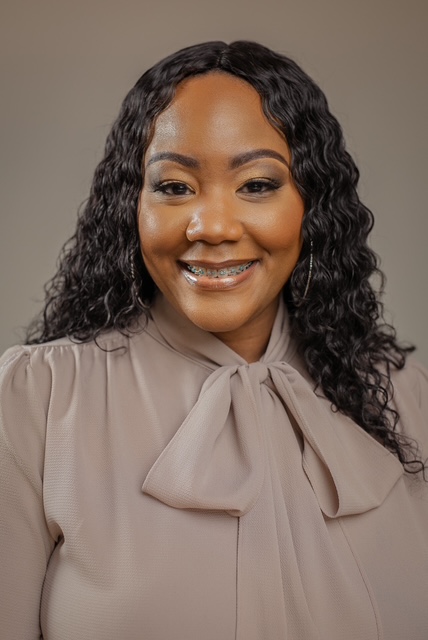
Patrice Wade (she/her) has been teaching technology at Guilford Preparatory Academy, a K–8 Title I public charter school in Greensboro, North Carolina, for nearly four years. She is a nationally recognized Technology Educator, the 2024–2025 CS Teaching Excellence Award Winner, and the 2025 Guilford Preparatory Academy Teacher of the Year. Patrice also serves as the school’s Director of Technology, where she equips students with future-ready skills in computer science, coding, robotics, virtual reality, drones, esports, digital technology, typing, and hands-on engineering with LEGO. She leads Girls Who Code to expand opportunities for student creativity, leadership, and innovation.
Patrice is an Amazon Future Engineer Teacher Ambassador, Common Sense Ambassador, Everfi Champion, Apple Certified Educator, Google Certified Educator, and North Carolina Teaching Fellow. Recently named a 2025–26 EdSurge Voices of Change Writing Fellow and a 2025 NC Learning Happens Here Ambassador, she is pursuing her Master of Arts in Teaching in Special Education and Technology at North Carolina A&T State University. Her mission is to leave every child better than she found them.