
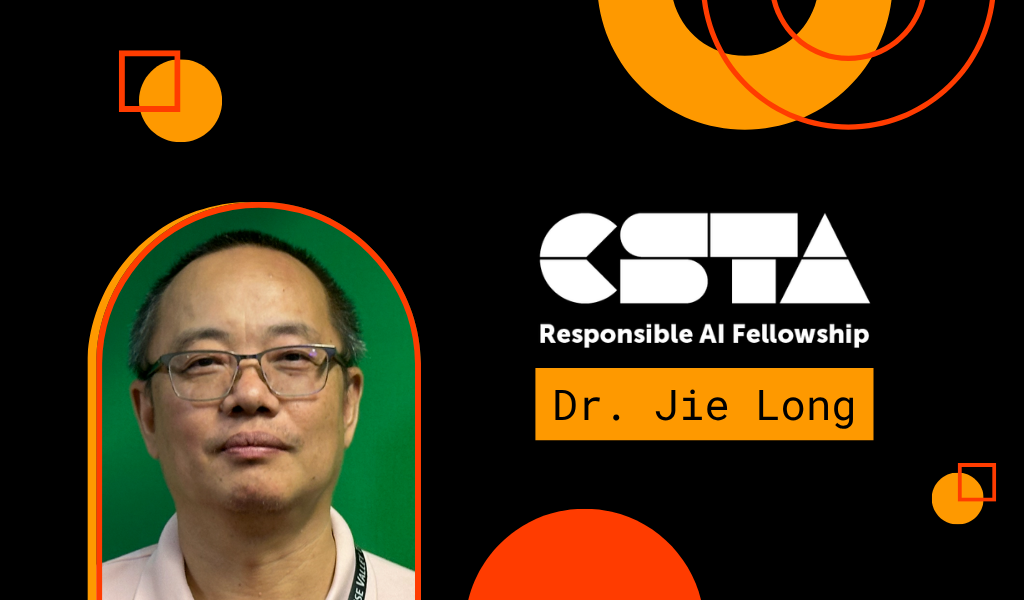
Dr. Jie Long is a computer science and CTE teacher at Paradise Valley High School in Phoenix, AZ, where he teaches IT, cybersecurity, Python programming, and AP CSP. He integrates CompTIA A+ and Security+ curricula with hands-on projects that prepare students for industry certifications and careers in technology, and actively advocates for increased opportunities for underrepresented groups in computing. Jie holds a PhD in electrical engineering from Iowa State University and is dedicated to ensuring all students have access to high-quality computer science education. In his free time, he enjoys hiking and exploring the outdoors.
Dr. Long believes in making space for AI learning to happen in all different settings. By using free, standards-aligned tools, he’s been able to embed responsible AI instruction into all of his CS courses. Armed with these tools, educators in all subjects areas can incorporate AI learning into their work, regardless of their programming background or access to hardware. He’s put this into action when partnering with subject-area teachers at his own school to design interdisciplinary lessons that explore AI ethics through narrative, rhetorical, and civic lenses. “I don’t view AI literacy as a siloed topic,” he says, “but as an interdisciplinary conversation that all educators can contribute to—and lead.”
In his own classrooms, Dr. Long has made use of modules like Code.org’s “AI and Ethics” unit and the Raspberry Pi’s Foundation “AI in the Real World” unit. One lesson explored bias in facial recognition systems, and students reviewed and discussed case studies related to surveillance, discrimination, and data privacy. They designed decision trees and simulated neural networks, then participated in a classroom debate and wrote position papers on how cities should regulate facial recognition systems. “The unit particularly resonated with students from underrepresented backgrounds, many of whom had firsthand concerns about algorithmic bias and digital privacy,” says Dr. Long.
When he thinks about scaling his approach across other subject areas, Dr. Long believes that his focus on applicability can help keep teachers and students engaged. “This model isn’t about teaching AI as an advanced technical subject,” he says. “It’s about helping students become critical thinkers, informed citizens, and ethical technologists.”
Making that vision a reality requires advocacy and collaboration, and Dr. Long is more than up for the challenge. He created a shared resource hub to help teachers in his district find ways to incorporate AI education into their classrooms. There, he offers CSTA standards–aligned lesson plans and assessment rubrics, including unplugged AI activities and class discussion guides on topics like facial recognition and ethical design. He has organized school- and district-wide professional development sessions, with a special focus on inclusive teaching practices and strategies to teach AI in low-tech settings.
As he’s seen at his own school, responsible AI use can become a part of just about any curriculum, or it can be taught as a standalone unit. He is passionate about sharing this model with others to ensure that all students at his school are prepared for the digital future that awaits them. He says, “I want to help ensure that AI transforms education responsibly, empowering teachers and students to lead—not just react to—this transformation.”
Dr. Long views the Responsible AI Fellowship as a perfect opportunity to deepen his understanding of AI, as both a teacher and an ethical practitioner. He hopes to work with his cohort to refine his practice, particularly as it relates to incorporating AI across subject areas. Building on the work he’s done at his district, he’d love to create a curated toolkit of low-tech lessons that teachers from any subject area can use to teach ethical AI in their classes. As AI tools continue to improve and become widely available, Dr. Long believes it’s more crucial than ever for educators to find thoughtful, ethical ways to teach their students about these tools and incorporate them into the classroom.
He says, “I view this fellowship as a space to grow alongside others who share my sense of urgency and hope: urgency to prepare students for an AI-driven future that demands ethical awareness, and hope that we can collectively create tools and communities to meet that challenge with purpose and care.”