
Before I became a teacher, I spent nearly two decades working as an electrical engineer, designing integrated circuits for wireless and mobile communication systems. In that world, nothing “just worked.” Every signal, every circuit, every design choice had a purpose, a limitation, and a tradeoff. A device that looked seamless to the user was always the result of many human decisions underneath the surface.
That background shapes how I teach artificial intelligence today.
For many students, AI can feel like magic. They type a prompt, and a polished answer appears. They ask for an image, a summary, or a line of code, and the system responds almost instantly. It is impressive, but it can also be misleading. When technology works smoothly, students may not see the data, design choices, assumptions, or human decisions behind it.
Responsible AI education should help students look beneath the surface.
In my computer science classroom, I want students to understand that AI is not a mysterious authority and not a replacement for their thinking. It is a human-made system that learns patterns from data and produces outputs based on those patterns. Sometimes those outputs are useful. Sometimes they are incomplete, biased, misleading, or simply wrong. Students need the confidence and vocabulary to question what AI produces before they trust it, use it, or share it.
One way I introduce this idea is through machine learning. I tell students that machine learning follows a process they already understand: data, patterns, model, prediction. Long before modern computers, scientists used observation and evidence to build models of the world. Johannes Kepler studied data about the motion of Mars, proposed models, tested them against evidence, and refined his thinking. Machine learning uses a similar loop, but at a much larger scale and with automation: collect data, find patterns, build a model, test predictions, and refine the system.
That comparison helps students see machine learning as a process, not a magic trick.
A simple classroom example is spam detection. Students can quickly recognize messages that look suspicious: “Win a $500 gift card,” “Your account is suspended,” or “Verify your password now.” From there, we can ask: What words or features might a model notice? What examples would it need? What happens if the training data is too limited? Could a legitimate school IT message be misclassified as spam? Could a dangerous phishing message slip through?
This opens the door to the deeper responsible AI questions:
- What data trained the model?
- Who or what might be missing from that data?
- What kinds of errors matter most in this situation?
These questions are simple enough for students to remember, but powerful enough to change how they interact with AI. They move students away from passive consumption and toward active evaluation.
That shift is especially important because students are already encountering AI in many areas of life. Recommendation systems shape what videos they watch. Filters and feeds influence what information they see. AI tools can help with writing, coding, studying, translating, and creating. But if students only learn how to use AI tools, without learning how to question them, we miss the most important part of AI literacy.
Responsible AI education is not only about preventing cheating. It is about helping students become thoughtful users, critical evaluators, and eventually responsible creators of technology.
This is why I am especially excited about my Responsible AI Fellowship project group’s work on a student-facing AI handbook and poster series. Teachers need guidance, but students need clear, accessible language too. A responsible AI poster in a classroom should not only say, “Don’t use AI to cheat.” It should help students pause and think:
- What is my purpose for using AI?
- Am I still doing the thinking?
- Did I protect my privacy?
- Can I verify this output?
- Whose perspective might be missing?
These kinds of reminders make responsible AI visible and practical. They also help teachers create a shared classroom language. Instead of treating AI use as a hidden behavior or a discipline issue, we can make it part of instruction: when AI is helpful, when it is harmful, when it supports learning, and when it gets in the way.
My goal is for students to leave my classroom with more than technical vocabulary. I want them to develop judgment. I want them to understand that models can be confident and wrong. I want them to know that data can reflect bias, that accuracy can hide harm, and that human oversight is not optional. I want them to see that responsible AI is not just about the tool; it is about the choices people make before, during, and after using the tool.
As an engineer, I learned that every system has constraints. As a teacher, I have learned that every student deserves the opportunity to understand those systems, question them, and use them wisely.
AI will continue to change. The tools our students use five years from now may look very different from the tools they use today. But the habits we teach now — curiosity, skepticism, evidence-based reasoning, ethical awareness, and human judgment — will continue to matter.
AI is not magic. It is a system built by people, trained on data, shaped by choices, and used in society. Our students deserve to understand that. And more importantly, they deserve to see themselves not just as users of AI, but as people capable of asking better questions, making better decisions, and helping shape a more responsible future with it.
About the Author
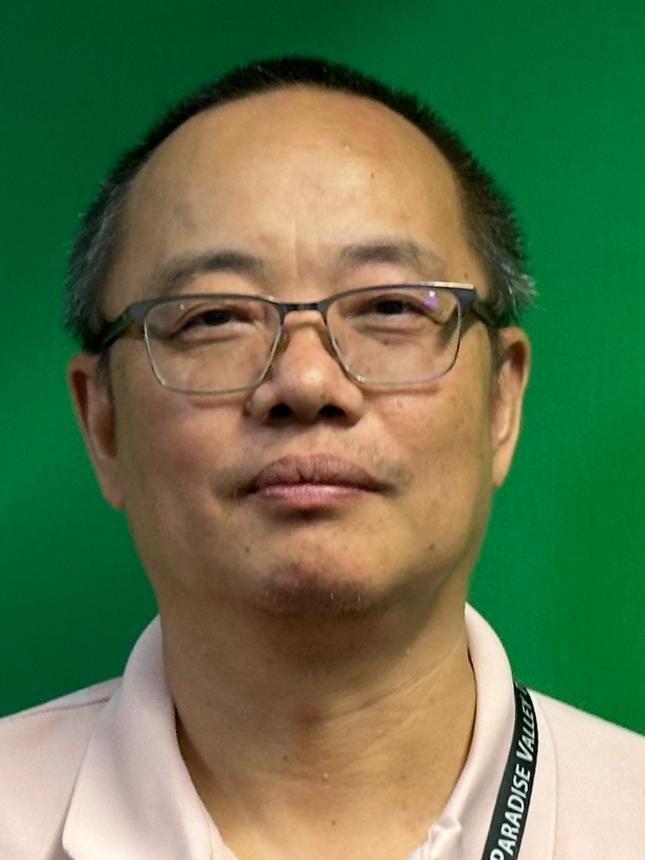
Jie Long is a computer science and mathematics educator in Arizona and a 2025–2026 CSTA Responsible AI Fellow. He holds a Ph.D. in Electrical Engineering and spent nearly two decades in integrated circuit design before moving into K–12 education. He teaches computer science, cybersecurity, and mathematics, and is passionate about helping students understand AI as a human-designed system they can question, evaluate, and use responsibly.