
Have you ever had that student, the one who can dream up a stunningly complex, creative solution to a problem but can’t seem to write a single coherent paragraph for the final report? The student who builds a breathtakingly innovative project that blows the prompt wide open but completely ignores the rubric’s step-by-step instructions?
I have. And for years, I’ve watched our educational system label these students as deficient. In staff rooms, I’ve heard brilliance mistaken for a lack of discipline, creativity for a lack of focus, and non-linear thinking for a lack of rigor.
But I’ve always seen something else; not a deficit, but a mismatch.
Our system rewards compliance, yet the mind of a true computer scientist thrives on questioning convention. In that tension, we fail our twice-exceptional (2e) students — learners who are both gifted and have a disability like ADHD, autism, or dyslexia.
We claim we want outside-the-box thinkers, but our classrooms, rubrics, and deadlines are the very definition of a box. We are a great filter for 2e minds, and we are mistaking their greatest features for bugs. We label a student with ADHD as distracted, missing that their brain is also capable of hyperfocus—a developer’s superpower. We label a student with autism as rigid, failing to recognize a mind built for pattern recognition. We label a student with dyslexia as a slow reader, overlooking their elite visual-spatial reasoning.
Our pedagogy whispers, “CS is not for you,” when the truth is, CS was built by minds just like theirs.
The solution isn’t a mindset shift for a few; it’s day-one action for everyone. The question isn’t, “What’s wrong with this student?” but “What’s wrong with the classroom that can’t fit them?”
Building the Asset-Minded Classroom
You don’t need to be 2e experts to make this shift. You just need to be willing to value mastery over method.
Refactor Your Rubrics Around “Spikes”
Traditional rubrics often value well-roundedness. They penalize the messy-but-brilliant project with no documentation. We must create spiky rubrics. Add a Design & Innovation or Logical & Systemic Thinking category that is weighted just as heavily as Code Correctness. This allows the student whose gift is in architecture, not syntax, to be recognized as brilliant.
Make “Mastery, Not Method” Your Mantra
We often demand a single path to the solution (“Show your work,” “Submit a written report”), which punishes the non-linear thinker who makes intuitive leaps. Offer radical choice. Could a student demonstrate their understanding of recursion with a three-minute video instead of a written test? Could they demo their project in a live conversation? If the answer is yes, that path should count.
Prioritize Project-Based Learning (PBL)
Short, decontextualized skill-and-drill lessons are torture for a brain that needs to see the why. To tap into 2e hyperfocus, anchor your content in larger projects tied to students’ deep, spiky interests. Let the student obsessed with game design learn your core concepts through building a game, not worksheets.
Become an “Asset-Mindset Detective.”
The next time you’re in a meeting about a student, pause. Play “spot the asset.” Is that student argumentative, or are they a precise, logical thinker who refuses to accept a flawed premise? Are they off-task, or are they exploring a novel solution you didn’t plan for?
We are at a crisis point. We don’t just need more coders; we need different kinds of minds. It’s on us to stop filtering them out. We must debug our systemic mindset and see what’s been in front of us all along: the bug is a feature.
About the Author
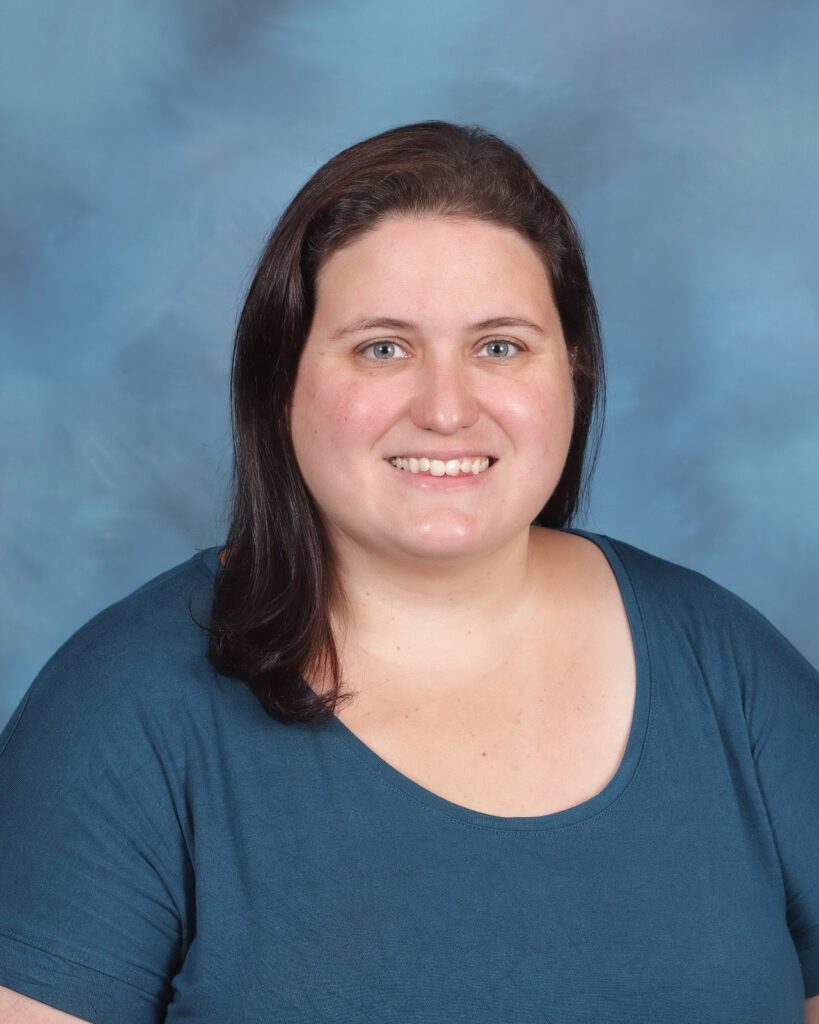
Sandra Wilfong is a dedicated educator with 21 years of experience, currently serving as an elementary Technology Innovation Coach for Chesapeake Public Schools. A former first and second-grade teacher, Sandra holds a B.A. from the College of William and Mary and a Master’s from Old Dominion University. Her leadership has been recognized through roles such as 2023 Amazon Future Engineer Teacher Ambassador, 2024 VSTE Coach of the Year, and 2025 VDOE Computer Science Champion. Sandra lives in Chesapeake with her husband, three children, and their dog.