
International Teacher Representative Candidates
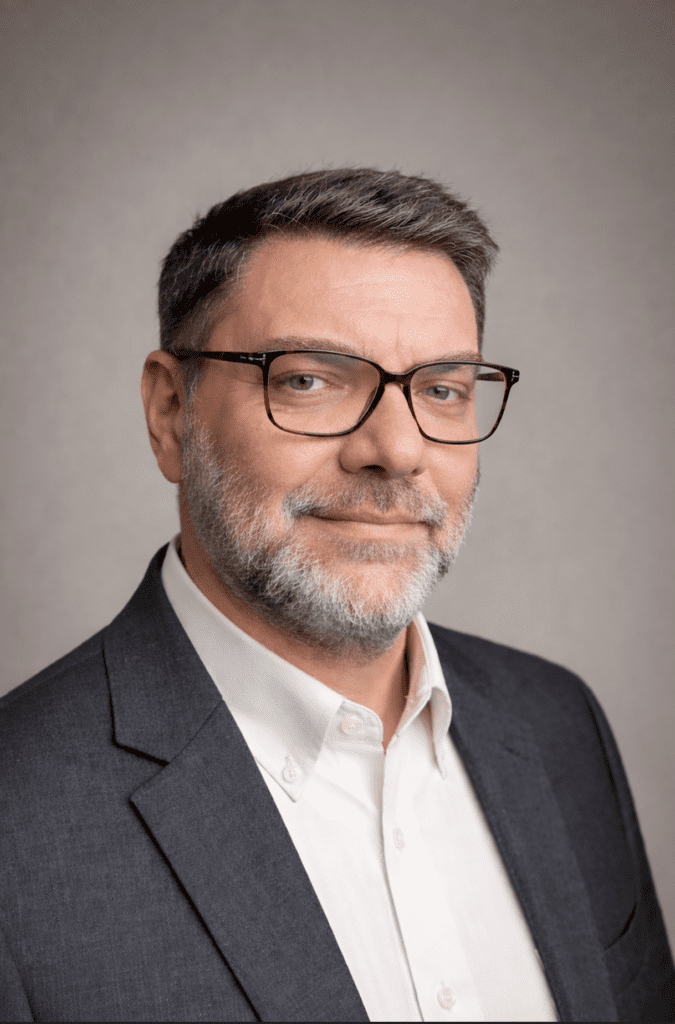
Andreas Tsouchlaris
I want to serve on the CSTA Board bringing an international perspective from four decades of K-12 CS/AI curriculum development across 65+ countries. As Academic Director of Binary Logic, cited by UNESCO for national curricula, and McGraw Hill’s K-12 CS/AI partner, my work centers on building communities worldwide. These goals align with CSTA’s priorities. Community: Strengthen international connections among CS educators by bridging diverse contexts. Through national teacher training for ministries, our team has built CS teacher communities everywhere. Equipping educators: Developing K-12 CS resources (textbooks, teacher guides, digital platforms) validated by ISTE and used in private and state schools globally. Leadership: My research on large-scale online CS PD addresses the global teacher shortage. This position offers the chance to help CSTA expand internationally, connecting educators in underserved regions with the standards and community they need. We need every CS teacher.
My work aligns with CSTA governance. Internationally, this meant leading CS/AI curriculum and/or policy work with 10+ Ministries of Education (Qatar, Saudi Arabia, Oman, Puerto Rico), creating national standards, and serving as reviewer for the 2026 revision. Content contributions include authoring the CS/CT pedagogical guidance for McGraw Hill’s Level Up K-12 CS/AI series, co-developing CTE and AP CSA/CSP textbooks, and supervising the first print & digital PreK-K resources aligned with the 2026 CSTA standards. Community work has involved facilitating PD for thousands of teachers across 65+ countries, designing pre-service and in-service programs, and presenting at ISTE and BETT, always mentioning CSTA’s work and standards. As partner in a global educational group for 40 years, this role has required strategic planning, team management, and ethical compliance. Through IEEE/ACM committee work, consensus-building and cross-cultural collaboration have been integral in my contributions.
Equity, diversity and inclusion drive my work. A key example: with McGraw Hill, I led the development of our new Title II-compliant K-12 CS/AI curriculum with full accessibility, including video tutorials with audio descriptions, ensuring learners with disabilities can fully engage. Completing the University of Florida CSforEveryone course on K-12 CS for Learners with Disabilities deepened that commitment. Our curricula are localized in 15+ languages and used in locations like Dubai or rural regions of Peru and Bolivia. In Ukraine, UNICEF funded our CS resources under ‘Back to Learning Together,’ reaching conflict-displaced students. In Puerto Rico, we provided bilingual CS resources supporting ELL students across all state schools. Our resources are gender-responsive. Cross-curricular activities connect CS and AI to familiar subjects, lowering barriers. A spiral curriculum ensures all students, regardless of prior experience, learn alongside peers from PreK through graduation.
My involvement with CSTA began with adopting the K-12 CS Standards as foundation for our international curriculum in 2012. Promoting CSTA standards across 65+ countries means advocating for their adoption in national CS education tenders by multiple Ministries of Education. Serving as reviewer for the 2026 Revision brought the chance to contribute feedback from widely diverse educational systems. Attending CSTA Conferences, and from now on as exhibitor with McGraw Hill, showcases K-12 CS solutions for U.S. and international educators. My latest contribution: developing the first PreK-K textbooks fully aligned with the coming 2026 standards covering cybersecurity, AI literacy, CT, and data science. CSTA is indispensable to global K-12 CS education. Its standards are the benchmark referenced when advising ministries. CSTA’s community and advocacy make it the essential organization for CS educators and expanding its international reach will amplify impact for teachers everywhere.

Edwin Santos de Guzman
As President of the Computer Science Teachers Association Philippines, my desire to serve on the CSTA Board is rooted in a strong commitment to volunteerism, service, and supporting educators, especially those with limited access to opportunities and resources. Through my work with CS educators, I have seen how collaboration and community empower teachers to grow and innovate in their classrooms.
If given the opportunity to serve, I hope to strengthen connections among global CS educators, expand access to professional learning resources, and support initiatives that reach underserved communities. My goal is to help build a thriving and inclusive network where educators feel supported, valued, and inspired to lead.
This aligns with CSTA’s strategic priorities of building a strong community, equipping educators with meaningful resources, and expanding leadership opportunities that encourage educators to serve and uplift others.
As President of CSTA Philippines, I bring leadership grounded in service, collaboration, and a strong commitment to advancing computer science education. My professional experiences in teaching and working with educators across institutions have strengthened my ability to lead beyond the classroom through professional development, community building, and technology integration initiatives.
I have also served and collaborated with other organizations such as CODITE-NCR & MMAAP-NCR, where I contributed to educator engagement, training programs, and academic collaboration. These experiences helped me develop skills in strategic planning, program organization, and building strong networks among educators across the Philippines.
Through these roles, I have facilitated seminars and workshops, supported teacher communities, and advocated for accessible CS education. I believe these experiences will allow me to contribute meaningfully to the CSTA Board in strengthening global educator.
As President of CSTA Philippines, I bring experiences grounded in expanding equitable access to computer science education, particularly for educators and students who have limited opportunities to engage with emerging technologies. In many parts of the Philippines, access to CS resources, training, and professional networks remains uneven. My work has focused on helping bridge these gaps by building communities of educators who can support one another and share accessible learning opportunities.
One example of my commitment to equity in action is the organization and facilitation of the Hour of AI and other professional learning seminars for K–12 educators across different regions. Through these initiatives, we intentionally invited teachers from public schools and underserved communities who often have fewer opportunities for training in artificial intelligence and computer science.
As President of CSTA Philippines, I have been actively involved in advancing the mission of the Computer Science Teachers Association by creating meaningful opportunities for educators to learn, collaborate, and grow in computer science education.
One of my key contributions is leading the implementation of the Hour of AI initiative for public school educators across different regions in the Philippines. These sessions introduce teachers to artificial intelligence concepts and practical classroom applications, helping expand access to emerging technology education. I have also helped organize professional development programs that provide continuous learning opportunities for CS educators and strengthen our national community of practice.
Based on my experience, CSTA plays a vital role in the K–12 CS education ecosystem by connecting educators, providing professional learning, and building a supportive global network that empowers teachers to deliver equitable and high-quality CS.