
Teacher Education Representative Candidates
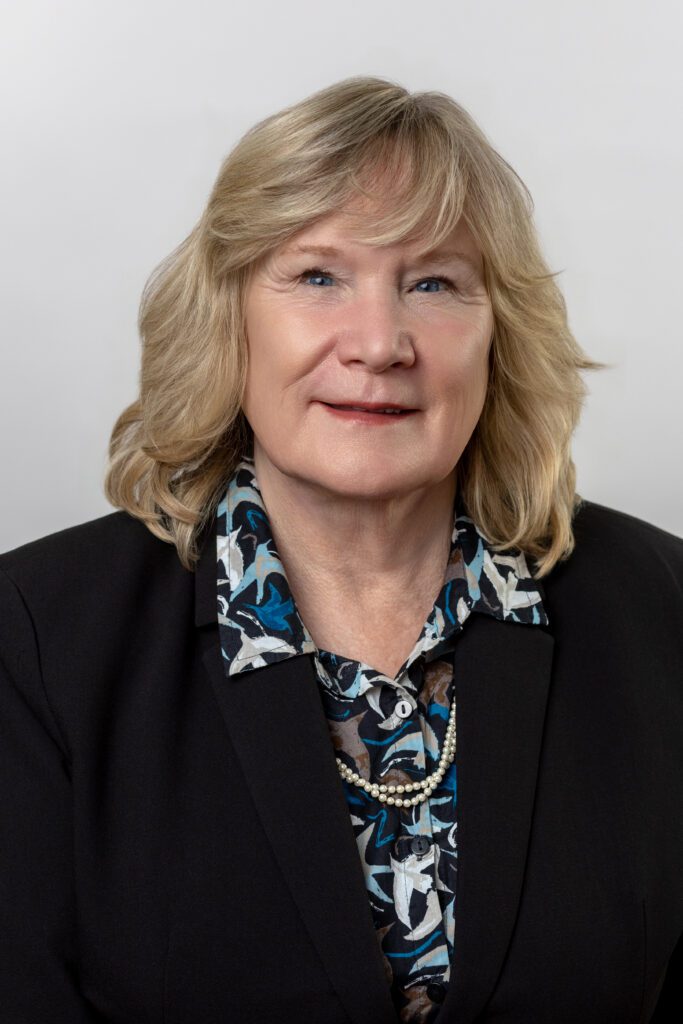
Lea Ann Christenson
Serving as a board member would be the next step in my role preparing pre-service and in-service teachers to teach CS and CT. My depth of experience as a public school teacher, Professor in the College of Education at Towson University, active member of the Maryland CSTA chapter, and recent honor of being part of the team that revised the CSTA standards brings deep, practice-grounded expertise to the Teacher Educator Representative role. My work preparing pre-service teachers at Towson University — alongside in-service teachers through grant-funded professional development — has shown me firsthand the urgent need for stronger CS teacher preparation infrastructure. As a board member, I hope to help strengthen resources for teacher educators, build pathways for general educators without CS backgrounds, and elevate early childhood as a critical and often overlooked entry point for CS education. CSTA can make this vision a reality, and it would be an honor to serve on the board.
My leadership spans classroom, university, state, and national contexts. As a professor at Towson University I develop curriculum for pre-service teacher preparation, bringing skills in policy advocacy, standards development, grant writing, professional development facilitation, research, and strategic planning. My $125,000+ in MCCE grants reflects hands-on program implementation. As one of 22 educators selected nationwide to revise the CSTA PK–12 Standards, I honed consensus-building skills and championed early childhood voices often absent from CS conversations. My tenure at the Maryland State Department of Education deepened my policy implementation and advocacy skills across PreK–12. A Master’s degree in Educational Administration grounds my understanding of organizational leadership. As a volunteer, I was part of a founding team that launched a preschool, from the ground up. I bring collaborative spirit and deep commitment to centering teachers and the children they serve.
Equity in CS education is not an add-on for me — it is the foundation of my work. As an early childhood educator, I have long advocated for the youngest learners, particularly dual language learners and children from underserved communities, to have full access to a robust grade level curriculum including CS and CT experiences. My MCCE-funded grants specifically target PreK–grade 2 teachers serving diverse student populations, equipping them with developmentally appropriate, culturally responsive CT curriculum. One concrete example: my grant-funded professional development reached teachers in high-need Maryland schools, building their confidence and capacity to deliver CS instruction to all young children. As one of only two early childhood experts on the CSTA standards revision team, while keeping an eye on the big picture across all grade levels I ensured that equity-centered, developmentally appropriate expectations for the youngest learners were embedded.
My involvement with CSTA spans local and national levels. As an active member of the Maryland CSTA chapter, I engage regularly with the CS educator community, sharing research and practice. Since September 2024, I have served on the team revising the CSTA PK–12 Standards, ensuring that PreK–2 children — and the teachers who serve them — have a strong, equity-centered foundation in the revised standards. CSTA invited me to present a workshop for PreK–3 teachers on the newly revised standards at the CSTA Annual Conference in July 2026. My scholarly contributions include peer-reviewed publications such as Andrews, M. & Christenson, L. (2026). Mathematical play out of doors in the UK and USA. In Theil, O. (Ed.), Play and Mathematics, EECERA Praxis Series, Taylor and Francis. My conference presentations include an invited full-day workshop at the NAEYC Annual Conference (2024) on CT and STEAM for dual language learners, for which participants earned CEUs. MCCE grants have furthered my work
Rebecca Odom-Bartel
I want to serve on the Board because supporting CS teachers has been the focus of my career. For more than a decade, I have worked across the CS education ecosystem, preparing pre-service teachers, supporting in-service educators through professional development, and helping licensed teachers earn CS endorsements and Add-On CS licensure in the state of Ohio and Alabama. I also teach undergraduate computing courses, giving me a perspective that bridges K–12 education and university computing programs.
Through this work, I see how critical strong professional communities and practical resources are for CS educators. CSTA plays a vital role in sustaining that ecosystem. As a Board member, I would work to strengthen connections between teacher preparation programs and K–12 educators, expand leadership pathways for CS teachers, and help educators have access to meaningful teaching resources.
My leadership experience comes from designing and supporting initiatives that expand CS ed for both teachers and students. At CSU, I coordinate a CS Education Endorsement program that prepares licensed educators earning CS licensure in Ohio. This work requires collaboration with school districts and state partners to align teacher preparation with Ohio’s CS standards and licensure pathways.
I also contribute to state-level CS education efforts, including consulting on Ohio’s CS standards, participating in the Ohio CS Policy Council, and collaborating with organizations such as ECEP to expand statewide CS initiatives. At the district level, I work with partners such as Cleveland Metropolitan School District to strengthen student pathways into computing, including informal and early exposure experiences.
My work is further informed through engagement with the broader CS education community, including ACM SIGCSE, ITiCSE, and CRA networks.
My approach to equity in CS education is grounded in the belief that expanding access begins with preparing and supporting the teachers who bring computing opportunities into their classrooms. Throughout my career, my work has been informed by research and best practices in culturally responsive and inclusive education, as well as principles advanced through the CSforALL movement.
One way I act on this is through the CS Endorsement program I coordinate at CSU. I see teacher preparation as equity infrastructure: when teachers earn CS licensure, they can introduce computing courses in schools that may not otherwise offer them. Many participants come from districts where students historically have had limited access to CS learning opportunities.
By preparing teachers with both CS content knowledge and inclusive instructional strategies, the program helps expand access and participation for a broader and more diverse group of students.
I have been an active member of CSTA since 2015 and currently serve as an At-Large member of the CSTA Ohio Executive Board. Through this role I support chapter activities that connect and support CS educators across the state. I have also contributed to CSTA initiatives as a reviewer for the Reimagining CS Pathways project and through service on the Cutler-Bell Awards committee.
Professionally, I engage with the broader CSTA community through conference participation and presentations at the CSTA Annual Conference. I also connect the teachers I prepare through our CS Education Endorsement program with CSTA resources, encouraging them to join the organization and engage in its professional learning community.
From my perspective, CSTA serves as the professional home for K–12 CS educators. It connects teachers with community, professional learning, and leadership opportunities while helping unify the broader CS education ecosystem across schools, districts, and higher education.
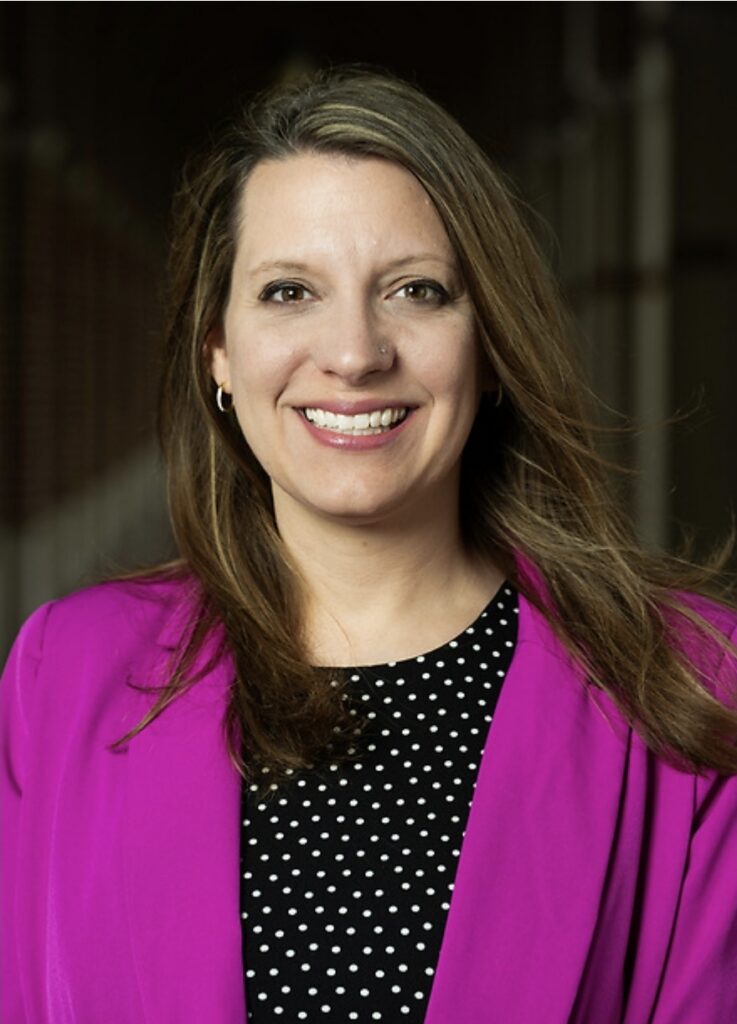
Brittany Templeton
I want to serve on the CSTA board because this community shaped who I am as an educator and I feel a deep sense of responsibility to give back on a larger scale. Being a leader in the CSTA Greater Houston chapter has shown me how powerful it is when educators feel seen, supported, and connected, and I want to help foster that sense of belonging nationwide. My work has included, growing chapter membership, building inclusive spaces and creating professional developments that helps teachers rethink what CS can look like and aligns with CSTA’s mission to equip and uplift educators. Whether I’m helping teachers prepare for various CS certification exams or modeling accessibility through hands-on activities, my goal is to make CS feel possible for everyone and to build CS leaders. Serving on the Board would allow me to share what I’ve learned, amplify the voices of CS advocates, and help strengthen the leadership pipelines so more educators feel confident stepping into CS roles.
I bring nonprofit leadership and Chapter leadership from my experience with CSTA local chapter as well as my current job. I am the Assistant Director for CS and Math at Rice University at the Center for STEM Engagement where I assist with strategic planning, network for industry partnership, and assist with grant execution. I coordinate multi-day events for both students and educators ensuring logistics, collaboration with impeccable execution. I design professional development and learning experiences that expand access to computer science and strengthen both teacher and student capacity. These experiences allow me to sharpen my ability to manage complex initiatives, stretch the dollar to impact more and sustain programs through partnerships and funding. I can contribute these skills to the CSTA Board by supporting strategic decision-making, strengthen organizational sustainability and expanding high-quality CS opportunities for educators, advocates and students nationwide.
My commitment to equitable CS education comes from my special education background seeing how often students are left out simply because no one designed with them in mind. In my PD sessions, I ensure to include easy ways to make CS accessible to all. In one particular session, I asked teachers to wear oven mitts while trying to press micro:bit buttons. This simple activity helps them feel the frustration students with fine-motor challenges experience and sparked some powerful discussions about accessible design, alternate inputs and the need to plan for ALL learners. In my work, I focus my training efforts target under resourced areas. Most of my organizations trainings are free and provide cross-curricular CS lessons. I also work and support teachers to gain CS Certification and give priority to teachers that currently are working at a school that doesn’t offer CS classes in order to increases access. CS accessibility, and inclusion must be built into every classroom.
I am currently a chapter leader with the CSTA Greater Houston Chapter and have served in this role for several years. I go above and beyond my duties as a Secretary. I help ensure our chapter thrives by working with the lwadership team and organizing monthly meetings, coordinating in‑person and virtual events, securing guest speakers, creating slide decks, tracking minutes, and sending monthly highlights to keep our community connected. Our leadership team has grown membership, strengthened engagement, and hosted two Houston‑area CS conferences that brought educators together from across the region. I have also attended the CSTA Annual Conference to deepen my leadership skills and bring new ideas back to our chapter. Through this work, I’ve seen how CSTA serves as a vital backbone of the CS ecosystem. It builds community, elevates teacher voices, and provides the professional learning and leadership pathways that empower educators to expand CS opportunities for all students.