
The Association for Computing Machinery (ACM) and the Computer Science Teachers Association (CSTA) announced eight high school students were selected from among a pool of graduating high school seniors throughout the US for the ACM/CSTA Cutler-Bell Prize in High School Computing. Eligible students applied for the award by submitting a project/artifact that engages modern technology and computer science. A panel of judges selected the recipients based on their projects’ ingenuity, complexity, relevancy, and originality.
The Cutler-Bell Prize is designed to recognize talented high school seniors in the United States at varying levels of CS proficiency, ensuring that students who are both new to CS, including self-taught learners with a portfolio of completed small projects (websites, apps, games), and those demonstrating advanced skills are celebrated. The program seeks to promote and encourage the field of computer science. It empowers young and aspiring learners to pursue computing challenges beyond the classroom, leading to potential and practical real-world applications.
David Cutler and Gordon Bell established the award in 2015. Cutler is a software engineer, designer, and developer of several operating systems at Digital Equipment Corporation. (d. 2024) was a renowned electrical engineer and researcher at Microsoft Research.
The Cutler-Bell Prizes are organized into three separate categories: Advanced Tier, Intermediate Tier, and Beginner Tier. Each Cutler-Bell Prize winner receives a cash prize depending on which tier they were selected for (see below for more details). The prize amount is sent to the financial aid office of the institution the student will be attending next year and is then put toward each student’s tuition or disbursed.
The winning projects illustrate the diverse applications developed by the next generation of computer scientists.
“For decades, the four core subjects in US high schools have been English, mathematics, science, and social studies,” says ACM President Yannis Ioannidis. “Computer science education has been viewed as a luxury, but I believe that very soon it will be a required subject for every student. The ACM/CSTA Cutler-Bell Prize in High School Computing demonstrates that being exposed to the principles of computer science at an early age can inspire students to do great things. We are especially encouraged that the award now recognizes outstanding students from both traditional classrooms and nontraditional paths, including those who are new to computer science or pursuing innovative projects outside of school.”
“This year’s recipients of the Cutler Bell Award represent the future leaders of the digital age,” said Jake Baskin, Executive Director of CSTA. “Their remarkable projects underscore the importance of equipping young people with the skills and knowledge to tackle real-world challenges through computing. I commend their creativity, perseverance, and commitment to making a positive difference in the world through computer science. Congratulations to the winners for their outstanding achievements, and thank you to Gordon Bell and David Cutler for their commitment to fostering excellence in computing education.”
Advanced Tier Winners
The Advanced Tier is for students with significant CS experience, including advanced coursework, college-level classes, certifications, internships, or complex projects. This tier recognizes high levels of technical rigor, depth of knowledge, and demonstrated achievement. Advanced Tier winners receive a scholarship of $8,625.00.
Mahita Bontu
Westwood High School, Austin, TX
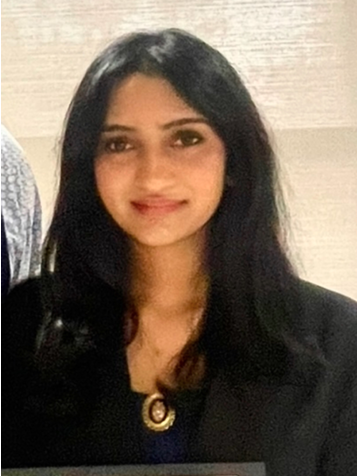
Women are statistically more likely to alter their routes, their schedules, and their lives around the threat of violence. Mahita Bontu, a graduating senior from Westwood High School in Austin, Texas, built Guardian Angel because she refused to accept that as normal.
Guardian Angel is a safety-first navigation app for women on college campuses. It pulls from real crime and incident data across multiple college campuses, starting with the University of Texas at Austin, to generate safer walking routes and put meaningful awareness tools directly in users’ hands. The data is niche, hyper-local, and intentional, because safety looks different depending on where you are and what time it is. The app continues to grow, incorporating more campuses and more granular data as it evolves.
That vision was backed by years of serious research experience. Mahita has studied AI-driven cyberattacks and their evolving threat landscape and worked in AI-powered educational technology through research at Carnegie Mellon University. Those experiences sharpened the technical instincts she first developed through Westwood’s computer science program and showed her what was possible when rigorous research meets a problem worth solving.
She is equally committed to the human side of that equation. Mahita believes the future of computing depends on who gets to build it, and she is passionate about expanding opportunity for women in the field, beyond just as users of technology but as the people shaping it.
This fall, she will study computer engineering at the University of Florida, and for the first time, Guardian Angel becomes personal in a new way. She will be exactly the person her app was built for. This only deepens her commitment to making sure it works for every woman navigating a campus that is still learning how to keep them safe.
Theodore Mui
Carlmont High School, Belmont, CA
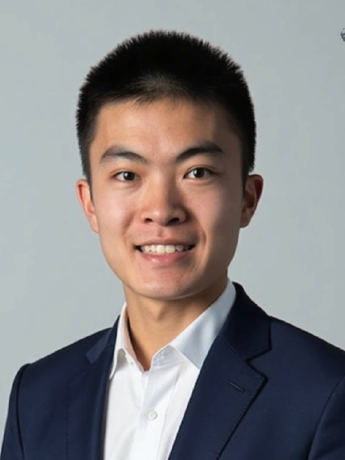
A few years ago, Theodore Mui started noticing increasing talks about diversity, from the news to his school. The rise in diversity efforts was especially prevalent in elite colleges and universities, which made statements about their commitment to eliminating racism and discrimination on their campuses. With this widespread promotion of diversity rhetoric, Mui wondered whether universities were actually fostering a more diverse set of ideas for their students. Mui built a computational pipeline that exhaustively collected and analyzed over 37,000 student opinion articles spanning 2010 to 2024 from eight elite US college newspapers, including Harvard, Stanford, and Yale. Using custom-built web crawlers, state-of-the-art language model embeddings, and zero-shot AI classification grounded in Moral Foundations Theory, his system tracks three signals simultaneously: how frequently diversity-related language appears, how wide the actual range of ideas in student opinion writing is, and how much cynicism toward institutions pervades the discourse. For measuring the “diversity of ideas” across colleges, he transformed each opinion article into a document vector in a 1024-dimensional space, where articles that are more similar in meaning appear closer together in the vector space. By applying a mathematical technique to calculate the volume of the space spanned by the document vectors, Mui was able to measure how the space of ideas changed over time. Institutional cynicism was measured by language model-based classification using a set of key moral foundations for understanding cynicism developed by Jonathan Haidt, which are: Authority/Subversion, Loyalty/Betrayal, and Fairness/Cheating. Paradoxically, while diversity rhetoric nearly doubled at almost all of the institutions in the last decade, the actual range of ideas significantly declined. Meanwhile, cynicism trends generally increased. One possible explanation for this relationship is that when students see their school promoting diversity while the space of ideas in campus discourse contracts, students may begin to lose trust in the institution as well as the concept of diversity itself.
Hillary Yang
Carmel High School, Carmel, IN
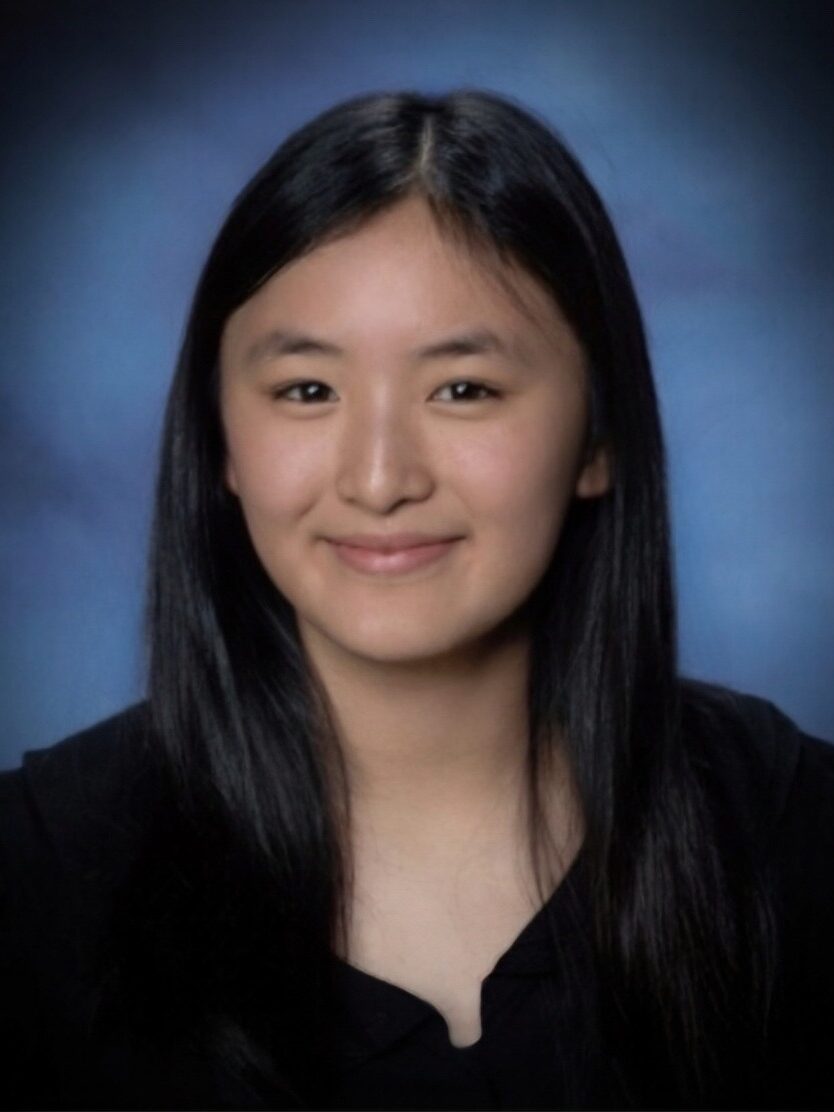
As the president of her school’s CS Honor Society chapter, Hillary saw firsthand the many ways the digital world accumulated information about its users. Visits to nursing homes, where she led high school students to help elderly residents navigate technology, revealed the extent to which data insecurity and vulnerability affected local communities. She addressed one specific, critical instance of the overarching problem: How can institutions use sensitive data for good while still retaining meaningful privacy protections?
She found the answer through her research in private machine learning. In this project, Hillary developed PAC-LR, a private linear regression algorithm grounded in PAC (Probably Approximately Correct) Privacy, a novel privacy framework that reframes how privacy is measured and enforced. In contrast to the current dominant standard of Differential Privacy (DP), PAC describes privacy as a problem of adversarial reconstruction hardness, applying noise calibrated to the underlying dimensions of the data itself. This proved especially valuable in small-data settings, where overperturbation can often render predictions meaningless. Hillary ran experiments across multiple datasets and privacy levels, comparing PAC-LR to both an unprotected baseline and leading differential privacy methods. Under strict privacy constraints, PAC-LR achieved nearly half the prediction error of DP, with the performance gap widening for tighter privacy guarantees.
Hillary envisions applying PAC privacy techniques beyond the lab, to real-world institutions. In settings where predictive modeling is critical—nursing homes, school districts, local clinics—and where the cost of a privacy failure is equally high, establishing robust privacy infrastructure will be critical as technology advances.
Intermediate Tier Winners
The Intermediate Tier is for students who have engaged more consistently in computer science through multiple courses or structured, project-based experiences. This tier recognizes students who have sustained their interest in CS over time, have begun applying their skills, and have completed projects. Winners in this tier will each receive a $6,750.00 scholarship.
Maanav Chittireddy
John P. Stevens High School, Edison, NJ
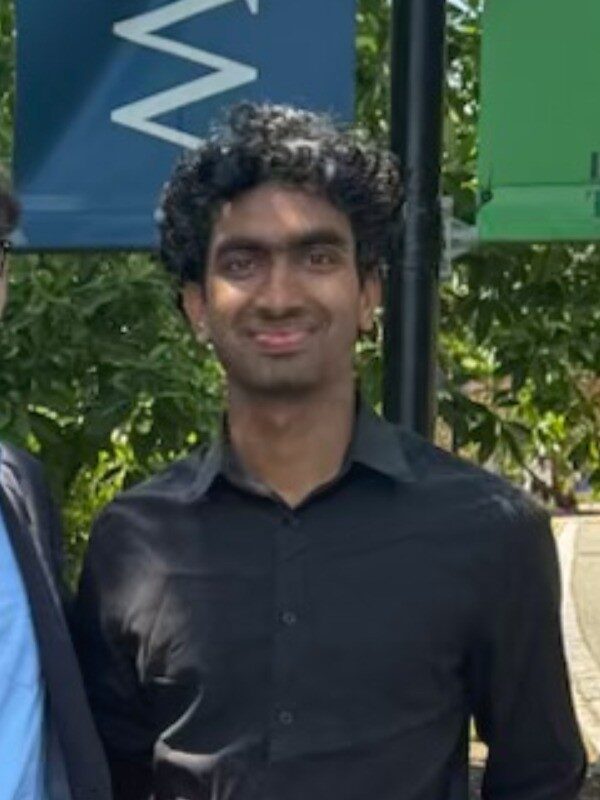
Maanav Chittireddy is an 18-year-old senior at John P. Stevens High School in Edison, New Jersey, whose passion for engineering and mathematics has led him to pursue innovative research at the intersection of computational modeling and public health. His current project focuses on analyzing carrier mobility patterns to better understand and predict rabies transmission dynamics, with the ultimate goal of developing data-driven intervention strategies that can save lives in underserved regions. By applying mathematical frameworks to epidemiological challenges, he seeks to create predictive models that can inform public health policy and optimize resource allocation in areas most affected by preventable diseases.
Maanav’s interest in this critical global health issue stems from a deeply personal place. His parents were once bitten by dogs in a situation where timely medical treatment was unavailable, exposing him to the devastating consequences of inadequate healthcare infrastructure and the urgent need for proactive disease management solutions. This experience ignited his commitment to leveraging quantitative methods to address real-world challenges that affect vulnerable populations, driving him to explore how engineering principles can be applied to biological systems to prevent future tragedies. His work aims to close this gap and improve disease prediction capabilities.
Beyond his academic pursuits, Maanav maintains a well-rounded lifestyle. He plays the Tuba in his school’s marching band and wind ensemble, plays basketball and pickleball, and enjoys exploring diverse cuisines.
Looking ahead, Maanav plans to study electrical engineering in college and is excited to continue pursuing this field. He hopes to combine his technical expertise with his passion for solving complex global challenges, ultimately contributing to innovations that improve lives around the world. Whether developing new technologies or refining systems that promote health equity, he remains dedicated to using his skills in service of others and creating a lasting positive impact on global communities.
Owen Dechow
Bald Eagle Area Middle and High School, Wingate, PA

Like many students around the world, Owen’s love for computer science began when he discovered a visual block-based programming language and website called Scratch. At the time, he was a homeschooled seventh‐grader with the amazing opportunity to focus his studies on the subjects that fascinated him most. Scratch did something simple but life-changing: it made computer science accessible to a middle schooler with no teacher. Owen states that his parents may not have been able to teach him programming, but they supported him relentlessly. During an algebra lesson, Owen’s mother stopped and told him that since he had started studying computer science, his understanding of mathematics had skyrocketed. She was right. From calculus to English, the imperative logic and way of thinking Owen had gained while coding was invaluable.
It wasn’t long before Owen wanted to build more ambitious projects. By his freshman year of high school, Owen had taught himself Python and C#; as a sophomore, he learned Rust, and even created his own programming language. His junior and senior years were no different as he built open-source tools and continued his studies. Yet throughout this journey, Owen maintained a passion for agriculture and biology. When he was a freshman, a professor at Penn State proposed to him a project that would use computer science to make genetics and biology education more engaging and, importantly, more accessible. Building that project, Owen was reminded of how he began with computer science: on a platform that made a field he had no background in accessible. Owen states, “That experience made it clear I needed to use my computer science skills to give those same opportunities to others.”
Next year, Owen will be attending Johnson University, majoring in computer science, but additionally majoring in ministry. It is his hope that he will be able to use computer science to reach many more people and give them the same opportunities that he was given.
Sathini Senthilkumar
Aragon High School, San Mateo, CA
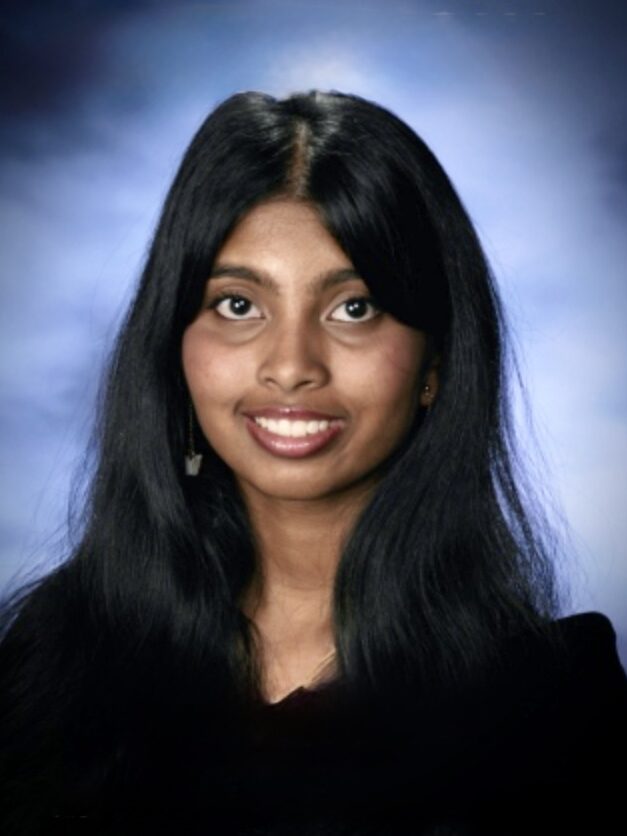
Sathini Senthilkumar is a high school senior from the San Francisco Bay Area and an incoming Computer Science student. She is passionate about using computing, artificial intelligence, and mobile technology to build tools that improve accessibility and help communities better understand complex information.
Sathini is the creator of DocWise: AI-Powered Legal Document Simplification for Community Accessibility, a mobile application designed to help users better understand complex legal documents before signing them. Inspired by seeing how confusing legal agreements can be in everyday situations, she developed DocWise to simplify legal language into clearer explanations. The app allows users to scan or upload a document, extract the text using optical character recognition, and processes it through natural language processing models to generate a simplified explanation. It also includes accessibility features such as translation and text-to-speech, allowing users to read or listen to explanations in different formats.
Through DocWise, Sathini hopes to support individuals who may struggle with legal terminology, including non-native English speakers, elderly individuals, and people without easy access to legal assistance. Her goal is to show how computing can be used not only for innovation, but also for community accessibility, transparency, and empowerment.
Beyond DocWise, Sathini continues to explore the intersection of computer science, artificial intelligence, and accessibility through app development and STEM outreach. She is involved in STEM ResearcHER, where she helps expand access to STEM opportunities for underrepresented students. As she continues her education in computer science, she hopes to pursue software engineering or AI-focused work and build technology that makes important information easier to understand.
Beginner Tier Winners
The Beginner Tier is for students who are new to computer science or have limited formal experience. This tier emphasizes inclusion and motivation, recognizing students who are curious, excited, and exploring CS through introductory courses, informal learning, clubs, or self-guided experiences. Winners in this tier will each receive a $4,500.00 scholarship.
Rodney Foster
Bayside High, Virginia Beach, VA
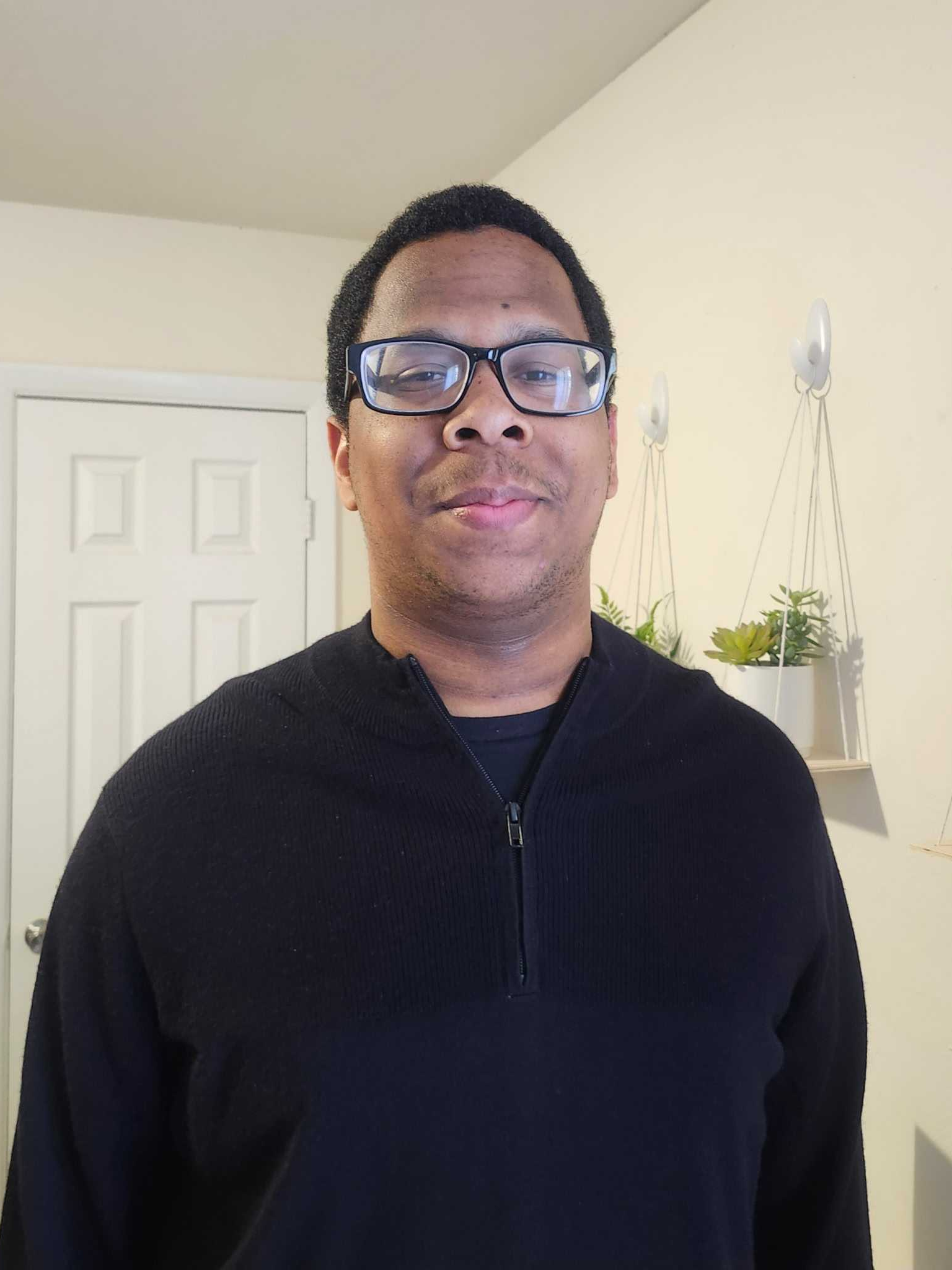
From kindergarten to now, Rodney has had an interest in the digital world and the effects of modern technology on our daily lives. This interest has led Rodney to enter STEM programs working with robotics, website design and development, and computer programming.
Rodney’s activity in these fields has allowed him to gain skills that he often applies in his daily life. Even though Rodney has gained a lot of technical skills from those fields, he “realizes that I, and many others, do not really understand computers on a fundamental level.” Rodney knows that many may struggle with learning advanced computer science topics or lack interest, believing the study of computers is boring. In an effort to increase his knowledge of computers, he dug deeper into computer hardware and CPU architecture to learn how simple 1s and 0s can be abstracted into increasingly complex components to execute direct machine code.
Rodney used tutorials, guides, and designing software to help him learn and eventually design his own custom CPU, which he called the PyroCPU. As he kept changing and making improvements on his CPU over time, Rodney learned more about computer hardware and writing machine code.
Rodney states, “I believe that by understanding computers at a more essential level, I can contribute to solving problems with modern software, such as technical difficulties, cybersecurity, and server management. In the future, I specifically aim to teach and share computer science concepts to a wide audience, and encourage creativity and intellectual growth in computer science.”
One way Rodney envisions helping others learn is by demonstrating the process of CPU designing and by breaking down complex topics into simpler ideas. “I wish to create interest and curiosity in those currently not interested in computer science. In doing so, I hope many will have an interest in modern technology and helping overcome any new obstacles in technological progression.”
Kavari Mcintosh
Jan Mann Educational Center, Opa-locka, FL
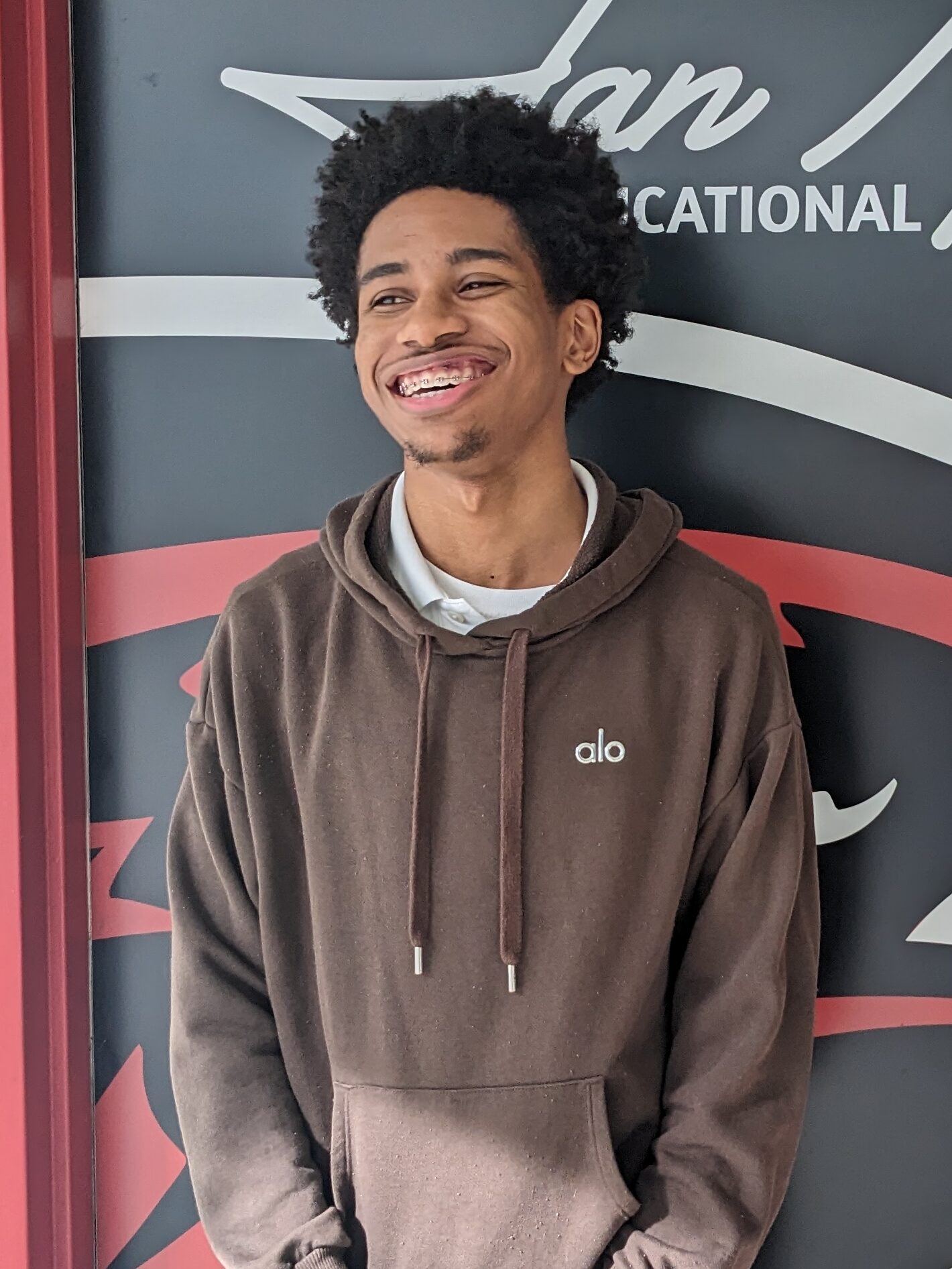
In his essays, Kavari states that his project Miami Roleplay “involves the development of a 3D First-Person Shooter (FPS) in the Unity engine, designed as a tactical simulation rather than a replicated game. It utilizes Unity’s Universal render pipeline for high performance across various platforms. The game features realistic weapon mechanics, including reloading, aiming down sights, and projectile physics rather than a simple shoot-and-run basic video game. The core of this project focuses on non-artificial intelligence patrol and combat behaviors, allowing players to engage in strategic scenarios within a designed 3D environment.”
One of the most significant impacts of Kavari’s project is its ability to bridge the gap between gaming skills and professional air traffic control training. By using immersive simulation technology, Kavari highlights how skills commonly developed through gaming, such as spatial awareness, concentration, and rapid decision-making, can translate into specialized aviation careers. Kavari also hopes to inspire young adults between the ages of 18 and 30 to explore opportunities in aviation and related high-demand fields.
In addition, the project’s adaptable FPS framework enables the simulation of tactical scenarios that would otherwise be too costly, complex, or dangerous to recreate in real-world environments. Kavari’s approach aims to provide personnel with accessible, high-quality training opportunities without the need for expensive hardware, ultimately supporting safer and more efficient workforce development.
About the Association for Computing Machinery (ACM)
ACM (acm.org) is the world’s largest educational and scientific computing society, uniting computing educators, researchers, and professionals to inspire dialogue, share resources and address the field’s challenges. ACM strengthens the computing profession’s collective voice through strong leadership, promotion of the highest standards, and recognition of technical excellence. ACM supports the professional growth of its members by providing opportunities for lifelong learning, career development, and professional networking.
About the Computer Science Teachers Association (CSTA)
CSTA’s (csteachers.org) is a membership organization that supports and promotes the teaching of computer science and other computing disciplines. CSTA’s mission is to unite, support, and empower educators to enhance the quality, accessibility, and inclusivity of computer science education. The Association for Computing Machinery founded CSTA as part of its commitment to K-12 computer science education.