
Let me tell you about the question that changed how I teach.
It was midway through our AI unit and my high school class was exploring how image classifiers work, running photos through a pre-trained model and watching it label things with confidence. One of my students raised her hand and asked: “Who decided what counted as a correct answer when they trained this thing?”
The room got quiet. I started to answer, then caught myself, because the honest answer was: not anyone who looked like most of us in this room.
We spent the next twenty minutes going off the lesson plan, talking about training data, about whose images get included, about why tools built thousands of miles away often don’t reflect the faces, places, and languages of the Pacific. We talked about what it means to build AI from datasets that have never heard of the Mariana Islands. It was the best class discussion of the year. And at the end of it, my student said, “Okay, so can we build something better? Like, something that actually works for our community?”
That question became the backbone of our spring semester.
What my student named was a gap that computing education has struggled with for years. We hand students technically sound projects and wonder why engagement is low, why certain kids sit back and wait for class to be over. Part of that answer, especially here in the Mariana Islands, is that we’ve been handing students tools and datasets built by and for communities that look nothing like ours, and then wondering why the learning doesn’t stick. We’ve been designing for students instead of with them.
That’s what Culturally Responsive Computing (CRC) is really about: fundamentally rethinking whose knowledge, whose community, and whose questions get to count as worthy of a coding or AI project. Here in the Pacific, where our students carry Chamorro, Carolinian, Filipino, Chuukese, Palauan, and many other heritages into our classrooms, that reframing is long overdue.
The research on this is pretty clear, and it connects directly to what my student was getting at. A two-year study examining high school CS teachers who implemented CRC practices found that their approach led to increased student engagement and improved access to cultural resources, particularly for historically marginalized students. Research consistently shows that culturally responsive computing increases engagement, particularly among students from historically marginalized communities (Elsinbawi et al., 2023). Other researchers argue that connecting computing to students’ cultural identities helps students see computer science as a place where they belong (Eglash et al.).
Our students already know this. They feel it every time they open a textbook and see no one who looks like them, every time a sample dataset references cities and zip codes that bear no resemblance to their lives, every time a “real-world” coding project solves a problem that has nothing to do with their community. The question is how we, as teachers, can close that gap, and do it in a way that’s authentic.
Start with the Community Before You Touch the Curriculum
The first real shift I made was spending the first two weeks of the school year doing what I now call a “community inventory.” I ask students to map their world: What’s here? What do people care about? What problems come up in conversation at family gatherings, at the village fiesta, at the community market? What knowledge lives in your grandparents that isn’t written down anywhere? This information becomes the engine for the entire year’s project work.
From one cohort of students, I received responses about a local fishing spot whose reef health nobody was tracking; a latte stone site that had no digital documentation; a grandmother who made traditional pottery and worried the techniques would die with her generation; a family that ran a roadside BBQ stand without any way to take orders in advance. Every single one of those became a real project.
The BBQ stand? Two students built a simple ordering app. The reef? A group pulled water quality datasets and built visualizations they shared with a local environmental organization. The pottery? One student, with her grandmother’s blessing and guidance, designed a digital archive with photographs, video tutorials, written descriptions of each technique and talked about the importance of technological preservation in her project presentation.
That’s the thing about culturally responsive projects: the technical depth doesn’t go down. If anything, it goes up, because students actually care about getting it right.
The good news is that becoming more culturally responsive doesn’t require abandoning your curriculum. In my experience, a few intentional shifts can make a significant difference:
Replace the dataset, keep the skill. One of the easiest changes I made didn’t require rewriting my curriculum at all. Instead of using generic practice datasets, I began replacing them with data from our own community. Students analyzed typhoon tracks, local fisheries data, census information, and marine protected area reports while practicing the exact same programming and data analysis skills. The algorithms didn’t change, but the conversations did. Students asked better questions because they already cared about the answers.
Let AI projects investigate their world. When we shifted our AI projects closer to home, student curiosity grew almost immediately. Rather than relying only on demonstration image classifiers, students began exploring questions connected to their own lives by identifying local fish species, documenting traditional weaving patterns, or recognizing native plants. Research suggests that connecting AI learning to students’ cultural experiences improves both engagement and AI literacy, but I didn’t need the research to see it. I could see it in the questions my students were asking.
Invite community knowledge as legitimate expertise. Some of the best guest speakers in my classroom don’t work in technology. Elders, local business owners, artists, and community leaders have all helped students understand problems worth solving. When students interviewed a grandmother preserving traditional Chamorro pottery techniques or worked with a family business to improve online ordering, they learned that valuable expertise exists far beyond textbooks. Computing became a tool for strengthening community knowledge, not replacing it.
Give students the choice, always. Perhaps the biggest change I made was giving students more ownership. Instead of assigning the same project to everyone, I let students choose the problem they wanted to solve, the audience they wanted to serve, and what success looked like. The Raspberry Pi Foundation’s research highlights student choice as a key part of culturally responsive computing, but I noticed something even simpler: when students cared about the problem, they were willing to work through the difficult parts of coding.
None of these changes required me to abandon my standards or purchase new technology. The programming concepts stayed exactly the same. What changed was the context.
The AI Piece is Urgent
This is where I want to come back to my student’s question, because it points to something that feels especially important right now: culturally responsive AI education isn’t just good pedagogy. It helps students become informed, critical users and creators of AI.
When students don’t understand how AI systems are trained, they’re less likely to recognize when those systems don’t work well for them or for people in their communities. For many students in the CNMI, that’s not a hypothetical concern, but rather the everyday reality of using technologies that weren’t designed with their languages, cultures, or environments in mind.
One of the most memorable moments came when my students tested image recognition tools using local plants and foods. Many of the items were misidentified or not recognized at all. The surprise on their faces quickly turned into curiosity. “Why didn’t the AI know this?” That question opened the door to a much deeper conversation about training data, representation, and bias than any lecture I could have given.
That’s the power of culturally responsive AI education. Students are learning how AI works, and also learning to ask who built it, whose experiences shaped it, and whose voices may be missing. Those are essential computer science questions, and they help students see themselves not just as consumers of technology, but as future designers who can build systems that better reflect the communities they serve.
Students who felt like AI was something that happened to them start to see it as something they can interrogate, challenge, and build differently. That shift in identity, from passive consumer to critical creator, is one of the most important things we can give a young person in a computing classroom.
That’s what we’re trying to do, isn’t it? Not just teach syntax and algorithms, but build classrooms where every student can see themselves as someone whose knowledge matters, whose community is worth coding about, whose identity belongs in the room.
Our students shouldn’t have to leave their identities at the classroom door to become computer scientists. The most meaningful computing projects don’t ask students to imagine someone else’s world, but rather invite them to improve their own.
Citations
Elsinbawi, M., Norris, A., Cohen, A., & Paley, M. (2023). Culturally Responsive Computing in teacher training. International Journal of Computer Science Education in Schools. https://ijcses.org/index.php/ijcses/article/view/179
Eglash, R. et al. Toward Culturally Responsive Computing Education. Communications of the ACM. https://cacm.acm.org/opinion/toward-culturally-responsive-computing-education/
Raspberry Pi Computing Education Research Centre. (2023). Bringing Culturally Responsive Teaching to K–12 Computing Education. https://computingeducationresearch.org/wp-content/uploads/2023/05/Bringing_Culturally_Resposive_Teaching_Project_Report.pdf
About the Author
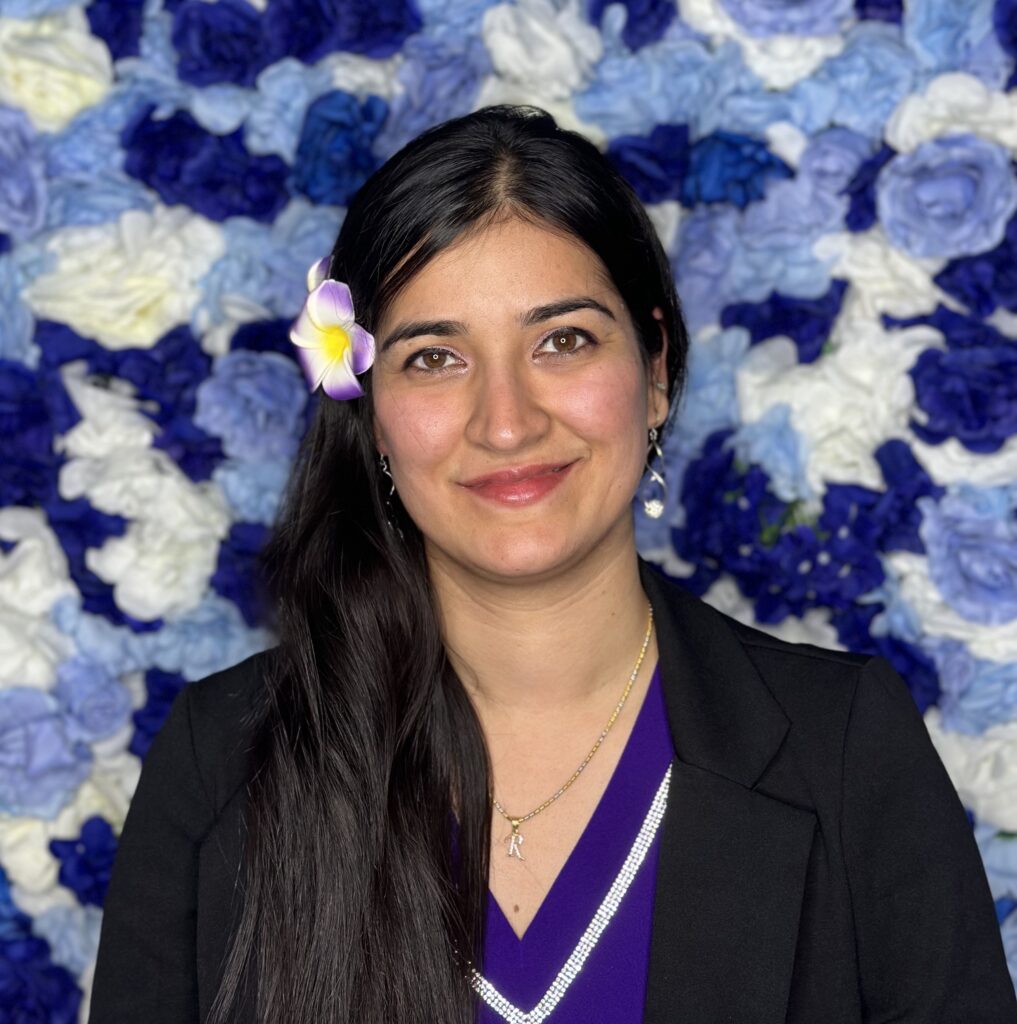
Dr. Riya Nathrani is a visionary educator and technology leader advancing computer science, artificial intelligence, and cybersecurity education. She empowers educators, students, and families through transformative professional development, innovative teaching practices, and engaging learning experiences. In 2022, she represented the CNMI at the White House as the State Teacher of the Year. She also designs, facilitates, and evaluates districtwide online learning programs serving thousands of students and educators. Her national honors include National Cybersecurity Educator of the Year, GenerationAI Luminary, Anthology Catalyst Award, ISTE 20 to Watch, and the APAICS Ignite Award.