
Quick! Name one thing you’ve been wrong about. GMOs? Juice cleansers? The moon landings? I can name more than one. Realizing you were wrong about a cherished belief isn’t easy; it’s a journey of self-doubt, humility, and sometimes fear of alienating the people around you.
I can think of plenty of times I’ve debated religion, politics, or tech trends with people who see the world differently. Those conversations are manageable because there’s a certain distance there, a built-in permission to disagree. But the rare moments when I’ve questioned beliefs shared by my own “tribe,” political, social, or even tech-minded colleagues, are anxiety-provoking. More often than I’d like to admit, I’ve chosen silence over friction.
That’s not a flaw, it’s human nature. For most of our history, belonging ensured survival. Today, that instinct shows up as conformity and hesitation to question ideas we’ve adopted from our communities.
We like to think we reason our way to conclusions, but often we adopt first and justify later. Ask yourself: how many people who trust AI-generated content could explain how it works? Likely not many. Confidence often outpaces understanding.
This is where critical thinking comes in. Students need to constantly ask themselves: How do I know this? What evidence supports it? What would change my mind? However, critical thinking is not just about evaluating information; it is about questioning our own beliefs and revising them based on evidence. In a world shaped by AI-generated content and algorithmic feeds, critical thinking is not optional; it is essential.
We can teach students to analyze code or evaluate sources, but if we ignore our own biases, we’re leaving the job incomplete. True epistemic vigilance isn’t just about judging information; it’s about examining the judge (aka, ourselves).
I propose that while teachers cover many parts of critical thinking, some key pieces are often missing:
- How our beliefs shape what we notice, trust, and share, especially in algorithm-driven feeds.
- How people accept or reject information based on what they already believe, much like biased data leads to biased AI outputs.
- What science denial and pseudoscience look like in real life.
- And how these ideas spread through search engines, social media, and AI, and can show up in our classrooms if we don’t address them.
For computer science educators, this is especially urgent. Students interact daily with algorithms, recommendation systems, and AI models that shape what they see and believe. Critical thinking is, therefore, a core competency in understanding computing—not just using it.
Introducing Generation Skeptics
Generation Skeptics offers dozens of classroom-ready lessons for computer science teachers. Our lessons include quick bellringers, stand-alone activities, and full units, all free and available for download from our website.
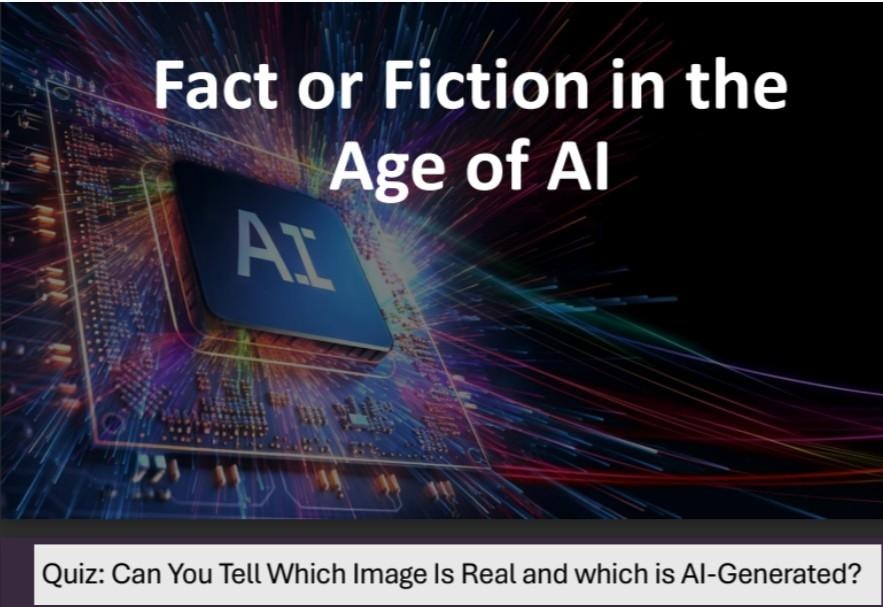
For example, in Fact or Fiction in the Age of AI, students learn to analyze AI-generated images to determine whether they are generated by AI or are real. The objective is to teach students to check before accepting an image as real. It’s getting practically impossible to tell the difference.
In the entertaining lesson “How to Sell Pseudoscience,” students practice using content creation tools by creating their own pseudoscientific products. This lesson’s objective is for students to recognize the techniques used by the creators of pseudoscientific products. Many of the products we see advertised online are sold using emotional appeals, shoddy or inaccurate data, and vague claims that often override factual evidence, just as digital platforms may prioritize engagement over accuracy.
The Nocebo Effect helps students understand how expectations and beliefs shape how they interpret information. The lesson objective is for students to recognize that questioning not just external data but also internal assumptions shapes critical thinking.
In the lesson, Wow, I Was Wrong, students are confronted with the discomfort of changing their minds when presented with new evidence. It reframes being wrong as part of learning, much like debugging code. In CS classrooms, this parallel is powerful: both coding and thinking require iteration, testing, and revision. Students practice revising both their programs and their beliefs based on evidence.
Lessons like Lateral Reading and The CRAAPTest explicitly teach students to verify sources, cross-check claims, and evaluate credibility. The goals are for students to confidently interact with search engines and AI tools by learning to assess the reliability and accuracy of digital information. For teachers with more time, we have a full, asynchronous unit to teach students these skills; it’s called What’s Your AI IQ?.
In the The News War: Think like a Journalist and Verify like a Skeptic, students differentiate between mis-, dis-, and malinformation. Through hands-on practice, they learn to spot algorithmic echo chambers, practice “lateral reading,” and use prebunking to defend against digital manipulation. Our website has modified News War lessons for middle grades and for elementary school students.
Through these activities, students are not just learning about computing systems; they are learning to critically evaluate their outputs, limitations, and societal impacts.
Generation Skeptics lessons align directly with the CSTA K–12 Computer Science Standards, particularly in the Impacts of Computing strand. For example:
- 3A-IC-24: Algorithm Impacts on Real-World Systems-Evaluate the ways computing impacts personal, ethical, social, economic, and cultural practices.
- 3A-IC-25: Bias Reduction-Students evaluate the impact of computing technologies on societal, environmental, and economic activities, and suggest methods to mitigate negative consequences.
- 2-IC-21: Social Media/Misinformation Analysis-Students analyze how algorithms and social media platforms contribute to misinformation and polarization.
- 2-IC-20: User Impact-Compare tradeoffs associated with computing technologies that affect people’s everyday activities and career options. This applies to the tradeoff between high engagement (likes/shares) and the proliferation of fake news
Teachers are also launching GenSkeps clubs, where students explore misinformation from Bigfoot to deepfakes, and hear from experts about how skepticism applies in both science and technology. These experiences extend learning beyond the classroom, helping students see how computing systems, human behavior, and information ecosystems interact in the real world.
Generation Skeptics (generationskeptics.org) provides free, ready-to-use lessons so educators don’t have to start from scratch. More importantly, it helps position critical thinking as central to computer science education. In a world shaped by computing, students must not only build technology but also question it, evaluate it, and understand its influence.
Let’s promote digital literacy, media literacy, and critical thinking as a core competency for navigating computing technologies. Epistemic vigilance can become a norm and not just a classroom goal. It can help students navigate a world where information and misinformation are equally easy to produce and share.
For more information about our asynchronous college course, PD and presentation opportunities, and starting a GenSkeps club at your school, contact the author at bvazquez@centerforinquiry.org.
About the Author

Bertha Vazquez is a retired middle school science teacher and the Education Director at The Center for Inquiry. She leads a network of 100 teachers who have delivered over 475 professional development sessions across 50 US States. Her innovative approach to teaching climate science has been featured in the New York Times and NPR. She is the editor of On Teaching Evolution (2021), a co-author of What Teachers Want to Know About Teaching Climate Change (2025), and a recipient of the 2023 Friend of Darwin Award. Bertha is a regular conference speaker and a Fellow of the Committee for Skeptical Inquiry.
References
TIES www.tieseducation.org
ScienceSaves www.sciencesaves.org
Generation Skeptics www.generationskeptics.org