
If I had a dollar for every time someone told me I wasn’t living up to my potential, I’d have a lot of money, but I’d still have internalized that criticism, letting it live rent-free in my head while I tried to figure out what was wrong with me. Growing up, the world knew I was gifted, but it didn’t know I was autistic because I didn’t know myself.
People often use certain phrases to describe neurodivergent students without understanding what they mean. The one I want to unpack today is “struggles with executive function” and what that actually looks like in real life.
What Are Executive Functions?
Executive functions are the brain’s management system; the skills that help us plan, organize, start, and finish tasks, remember steps, regulate emotions, and shift focus.
Think of it like the CEO of the brain. Now imagine that the CEO keeps losing their coffee, forgetting their password, and getting distracted by any bird that lands outside. Oh, and everything is too loud. That’s what executive dysfunction feels like on the inside.
The Neuroscience: Why It’s Harder for Some
Most executive functions live in the prefrontal cortex; the area just behind your forehead. It connects to regions that handle memory (hippocampus) and emotion (amygdala). For neurodivergent people, these circuits function differently, not worse.
Research shows:
- ADHD: less consistent activation in the prefrontal cortex and weaker dopamine signaling. According to research conducted by Dr. Amy Arnsten at the Yale University School of Medicine, functional MRI imaging demonstrates that individuals with ADHD display less consistent prefrontal cortex activation when executing top-down attention tasks.
- Autism: differences in connectivity make it harder to filter sensory input and prioritize tasks. The Intense World Theory suggests that some autistic individuals are hypersensitive to stimuli.
- Anxiety/Depression: overactive amygdala hijacks attention and working memory (PubMed)
- Trauma: chronic stress weakens prefrontal networks and regulation (PubMed)
It’s not laziness when it’s neurobiology. Please stop punishing people for their neurotypes, teach them how to work with them instead. I prefer to think of my brain organizing the entropy coming in from my senses. In a system, organizing entropy requires increasing entropy elsewhere and I believe the more entropy I organize, the more I need to move my body to process.
Why “Just Try Harder” Doesn’t Work
When a neurodivergent student hears “just focus” or “stop procrastinating,” the brain systems that enable that may literally not engage. Dopamine drives motivation; if a task feels overwhelming or boring, there’s no dopamine spark to kickstart the process.
It’s like asking a phone at 2% battery to open ten apps and update its software. The hardware isn’t broken, it just needs charging, structure, and patience.
In computer science classes, we see this daily. Debugging code, managing projects, or interpreting algorithms all depend on executive function skills. When we scaffold with pseudocode, checklists, and collaborative problem-solving, we’re teaching students to think like their own mental coder, sequencing, debugging, and optimizing their thoughts.
How This Looks IRL
- They did the assignment but forgot to turn it in.
- They open Canvas, stare at the screen, and somehow end up on YouTube watching AI Mr. Rogers on WWE (you’re welcome).
- They panic when the schedule changes.
- They forget passwords, laptops, or chargers.
- They need reminders but feel ashamed for it.
- They ask “why” questions to build a mental roadmap, not to be difficult.
- They blurt things out or seem abrupt, but mean no harm.
- They aren’t unkind but have few, if any, friends
And honestly? Many teachers are quietly managing these same struggles ourselves.
What Actually Helps
Scaffolding works better than shame. Being neurodivergent is hard enough without feeling like you’re disappointing people just by existing.
At first, I wrote this piece as a guide for teachers to support neurodivergent students. Then a tired teacher friend said, “How are we supposed to do all this for every kid?”
Fair point.
Then I listened to Temple Grandin talk about how autistic children need to experience things to learn to adapt and discover joy. I realized, the goal isn’t to make teachers superheroes, it’s to teach students to help themselves. My entire life would have been different if I’d known how to self-regulate or that it’s acceptable to nope out of situations where I am overstimulated. Speaking of noping out, my experience has taught me that overflow from the trigeminal nerve (cranial nerve X) which receives light and sound leads to involuntary shaking of my head that appears I am saying no when I am not. Many times I was labeled defiant for shaking my head “no” to clear incoming data from senses, not to argue with people. If I cannot escape the stimulus (light/sound), I can have a focal seizure. I am a biologist having to learn neuroscience to deal with my late diagnosis.
Teaching Students to Support Themselves
Here are self-management tools that work for me, and could help students, especially in CS classrooms:
- Use alarms intentionally. Name them for the task (take meds, turn in assignments, charge laptop).
- Double alarm for urgent things. Your brain may ignore the first one if you’re hyper-focused.
- Switch tasks gently. Pause between tasks, stretch, or use sensory grounding before shifting focus. Tell your brain out loud what you are doing, sing it even.
- Ask “why” strategically. Tell teachers it helps you plan and focus, not challenge authority.
- Gamify dopamine. “If I finish X, I get 20 minutes of YouTube.”
- Understand your wiring. Learning the biology behind your brain builds compassion and strategy.
- Double Empathy Problem (Milton). Autistic people are often viewed as lacking empathy because we prefer to communicate by being literal. Challenges arise when autistic people carefully choose specific words to say exactly literally what they mean only to have their literal words interpreted through top-down, neurotypical means of communicating by adding subtexts or tone policing.
Sensory and Structural Supports for Students
- Use non-white backgrounds and show students dark-mode browser add-ons.
- Teach about tinted overlays or glasses to reduce visual strain.
- Starting class with mindfulness or sensory grounding helps both shutdowns and emotional outbursts because it’s the same pathway, neurologically.
- Teach grounding techniques (5 things you see, 4 you feel, etc.) to reengage the parasympathetic system.
- Lead with compassion. Most of these students have been punished for what they can’t control.
- Help students sell their work, not themselves. Build portfolios that speak for them, especially the awkward ones.
- Encourage them to follow neurodivergent creators online; we really do think differently and it’s a relief to hear it out loud.
The Takeaway
When you see a student struggling to start, stay on task, or turn something in, remember: their brain might be running a marathon you can’t see.
If we respond with empathy, humor, and structure instead of frustration, we teach them not just content, but how to be human.
Because we all lose our inner CEO sometimes, and supporting executive function doesn’t just help a few; it strengthens every brain in the room.
What starts as a support for some becomes a foundation for all, helping every student learn to think computationally, compassionately, and confidently. Having more success teaches brains they are capable of succeeding and for some kids, having a safe space at school to succeed could be the only one they experience.
About the Author
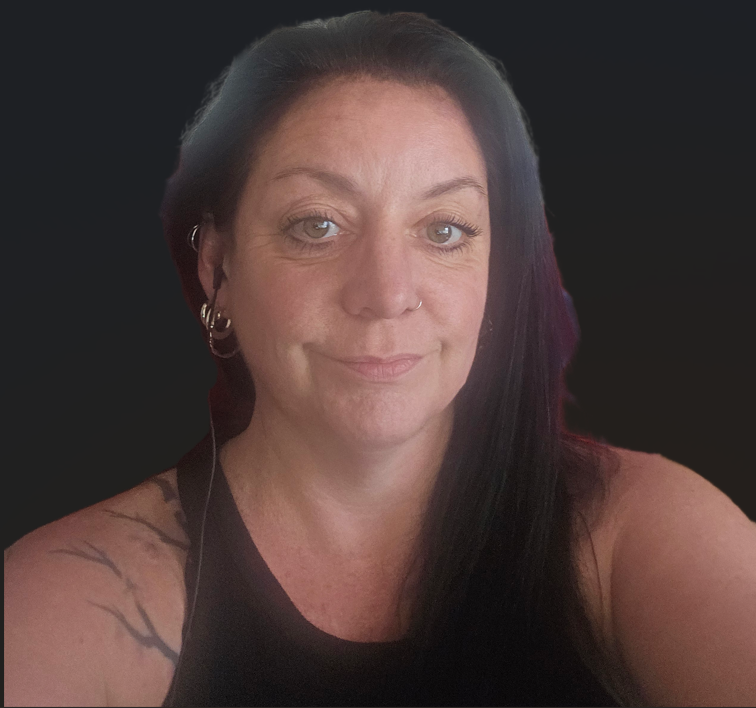
Shanna Bohrer began teaching science 15 years ago because she knew science class could be better. After a decade in the classroom, she shifted into computer science, driven by her love of learning new things. That move led her to the Computer Science Teachers Association (CSTA), where she first began exploring equity in education. Growing up in the South, equity wasn’t often part of the conversation, but through CSTA she learned what authentic equity work looks like. The realization that she has of autism in 2024 deepened this commitment, especially in supporting neurodivergent students and girls who, like her, might otherwise go unseen or misunderstood.
Currently, she serves on the CSTA Conference Committee and enjoys connecting with educators nationwide to build stronger, more inclusive communities. Outside of work, she’s married with two children, Trinity and Anaken, and loves her black cat, Nox, who frequently joins Zoom calls.