
As a former teacher now serving as a state lead, I try to keep one foot in both worlds. I spend a lot of time looking at how national and state data trends connect to what’s actually happening in schools, especially since reports about our progress toward “CS for all” don’t always include all students. Even efforts that are explicitly designed to broaden participation—many of which are considered successful—deserve a closer look.
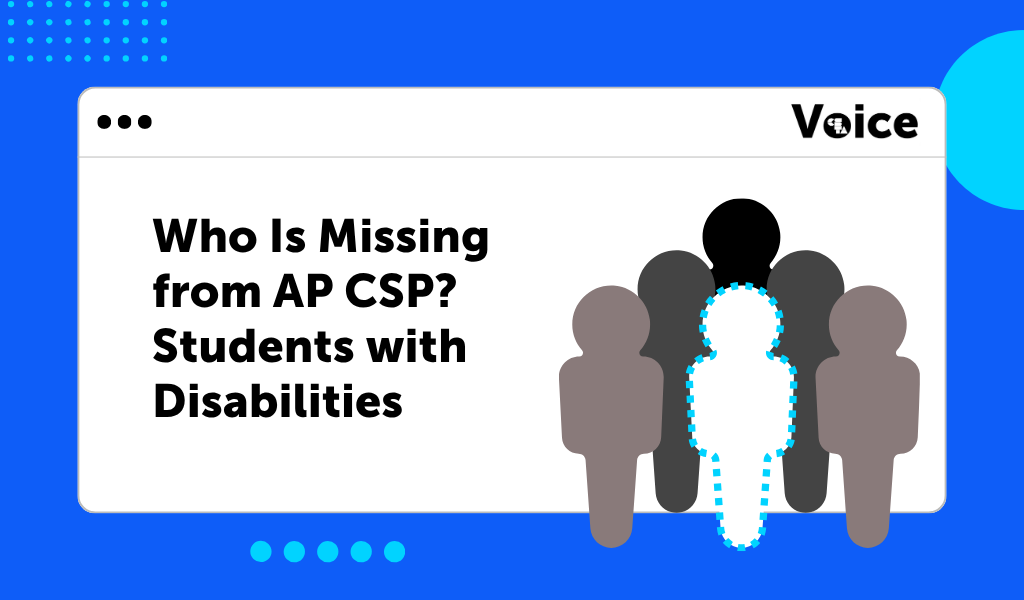
Advanced Placement Computer Science Principles (AP CSP) has been widely celebrated as a gateway into CS. Since its launch, the course has helped increase participation among historically underrepresented groups, including females and students of color. But one group is often missing from these conversations: students with disabilities. A closer look at the data reveals a whole new story.
Recent data from Pennsylvania highlights a broader challenge for the CS education community: expanding access to CS courses does not automatically lead to equitable participation. In 2023–24, students receiving services under the Individuals with Disabilities Education Act (IDEA) made up:
- 18.6% of the total student population
- 8.8% of students enrolled in CSP courses
This means students with disabilities participated in CSP courses at roughly half the rate we would expect based on their presence in schools.
Courses labeled as AP showed substantially lower participation rates:
- Non-AP CSP courses: 13.7% participation
- AP CS courses: 4.4% participation
While the data shows a clear participation gap, it does not fully explain why it exists. Notably, factors often associated with expanding CS programs, such as the number of foundational courses offered, teacher experience, certification type, and funding, showed little to no relationship with participation rates for students with disabilities.
Participation may be shaped by deeper structural factors, and this has important implications for the CS education community, especially as we prepare to implement the revised CSTA PK-12 CS standards. The revised standards are based on our shared vision of “every student prepared for a world powered by computing,” including students with disabilities. Strong standards can help guide curriculum design, instructional practices, and inclusive learning experiences.
But even the most thoughtfully designed, standards-aligned course, AP CSP or any other, cannot ensure equitable participation on its own. If students with disabilities are not encouraged to enroll, if there are limiting or conflicting course schedules, or if curriculum and materials are not accessible, the opportunity to learn CS truly doesn’t exist.
In other words, equity in CS education depends not only on how many courses are offered or what is taught in them, but also on whether systems and structures ensure all students have a real opportunity to enroll, participate, and succeed.
What You Can Do
For teachers, making CS education more inclusive for students with disabilities does not require conducting research studies, inventing new tools, or adopting entirely new curriculum. You can begin by examining participation patterns in your own classes, collaborating with colleagues and school leaders, and connecting with other CSTA members.
Identify participation gaps in your own courses
National and state-level reports and data dashboards are useful tools, but many exclude students with disabilities and do not provide school- or course-level views. You can use this Google Sheets workbook I created to compare enrollment in your CS courses to your school’s overall population.
Collaborate to remove barriers
The most impactful thing you can do, literally today, is to reach out to someone else in your school. Send a friendly email, pop by someone’s classroom or office, or initiate a “walk and talk” on the way to the cafeteria. Whatever your approach, initiate conversation and spark collaboration.
Team up with special education colleagues to:
- Check the accessibility of CS curriculum and materials.
- Co-create course recruitment materials.
Connect with school leaders and counselors to:
- Discuss how students with disabilities are advised into CS courses.
- Review the master schedule for any scheduling conflicts.
- Revise course descriptions to remove implicit negative messages and unnecessary prerequisites.
Engage with students with disabilities and their families to:
- Build positive relationships.
- Learn about their perceptions of CS and CS courses.
Join CSAccess
You can also collaborate with others outside your school. The CSAccess Working Group is a community of CSTA members who believe that CS is a right that should be ensured for everyone and that computing must be made more inclusive for individuals with disabilities. Join us to share strategies, explore accessible tools, and promote awareness that accessibility can affect anyone at any time and should be prioritized in CS education.
If we want CS for all, we have to examine who is actually participating. Offering a course isn’t enough. Small changes in how courses are described, who is encouraged to enroll, and how schedules are structured can make a meaningful difference for students with disabilities.
About the Author
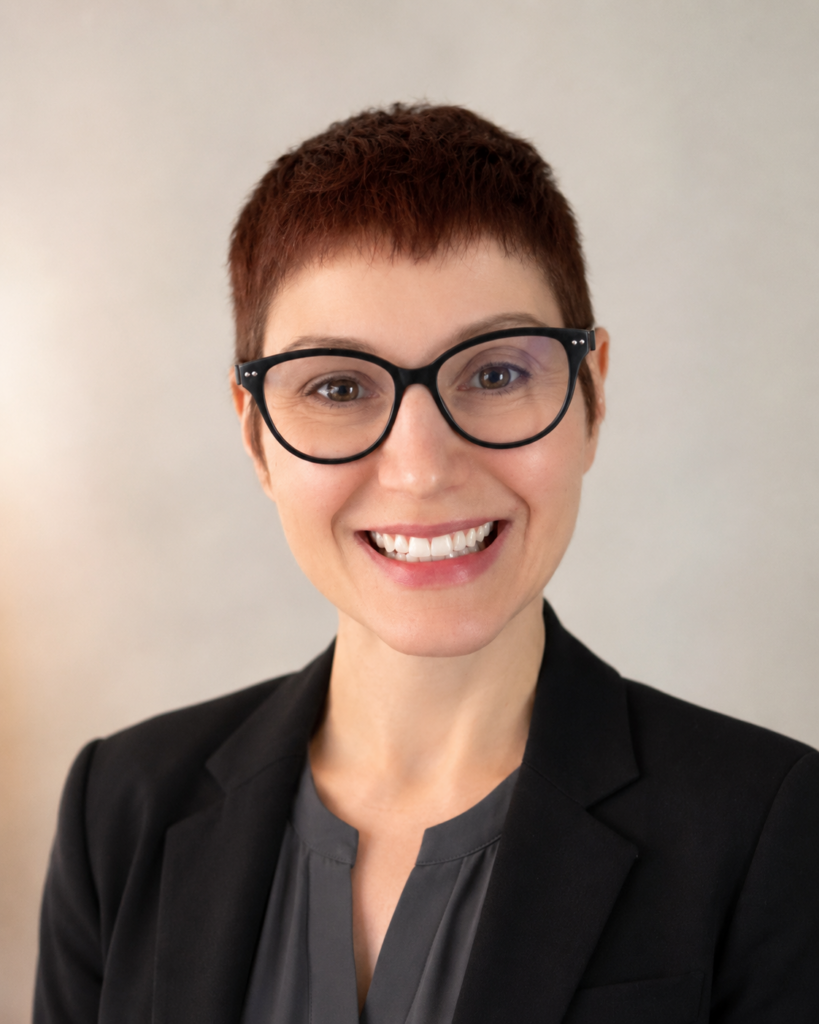
Dr. Sara Frey is an educational consultant at the Pennsylvania Training and Technical Assistance Network (PaTTAN), serving as the state lead for K-12 CS education and co-lead of the Accessible Educational Materials initiative. A former middle school teacher and library media specialist, her work focuses on building inclusive and equitable CS learning environments. Frey leads Pennsylvania’s ECEP Alliance team and is active in the CSTA CSAccess workgroup.
References
CSAccess Working Group – Computer Science Teachers Association. (2024, May 30). Computer Science Teachers Association. https://csteachers.org/csaccess-working-group
Frey, S., Williams, H., & Stefik, A. (2026). Students with Disabilities in Computer Science Principles: An Examination of Capacity, Access, and Participation. Proceedings of the 57th ACM Technical Symposium on Computer Science Education V.1, 365–371.https://doi.org/10.1145/3770762.3772527
PaTTAN (2026). CS Course Data Analysis Workbook [Spreadsheet]. PaTTAN. https://www.pattan.net/Evidence-Based-Practices/STEM/computer-science
Sax, L. J., Newhouse, K. N. S., Goode, J., Nakajima, T. M., Skorodinsky, M., & Sendowski, M. (2022). Can Computing Be Diversified on “Principles” Alone? Exploring the Role of AP Computer Science Courses in Students’ Major and Career Intentions. ACM Transactions on Computing Education, 22(2), 1-26. https://doi.org/10.1145/3479431
Wyatt, J., Feng, J., & Ewing, M. (2020). AP Computer Science Principles and the STEM and Computer Science Pipelines. College Board. https://apcentral.collegeboard.org/media/pdf/ap-csp-and-stem-cs-pipelines.pdf