
Introduction
As computer science education continues to expand across K–12 settings, educators need meaningful tools to reflect on and strengthen their instructional practice. The National Board for Professional Teaching Standards requires candidates to reflect on their practice as part of the application portfolio. As stated in a NBPTS blog, “Reflective teachers are positive role models of lifelong learning for their students as well as for their professional communities.”
What are the CSTA Standards for CS Teachers?
CSTA published the CSTA Standards for CS Teachers in December 2019. The Standards were designed to provide clear guidance around effective and equitable CS instruction in support of rigorous CS education for all K–12 students. The Guidance for Reflective Teachers was developed as a tool to assist CS teachers in evaluation on their own progress toward meeting the CSTA Standards for CS Teachers. This is an iterative process encouraging continual introspection using the Self-Reflection Worksheet to guide the teacher’s growth through goal setting and ongoing professional learning.
Why This Course was Created
Even with the guidance, it can be difficult for CS teachers to know how and where to start in the reflective process. The Using The CSTA Standards for CS Teachers To Improve Practice Course provides a guided, self-paced way for CS teachers to overcome this hurdle. During the course, teachers learn about the CSTA Standards for CS Teachers and how to use them to improve their practice in the CS classroom. The teacher completes the course at their own pace when it is convenient for them. The course steps the practitioner through completion of their own Self-Reflection Worksheet as they progress through the modules of the course.
What this Course Includes
The course consists of seven modules, each of which is focused on the CSTA Standards for CS Teachers.
Module 1
Introduction to the Course
- Identify and examine the CSTA Standards for CS Teachers.
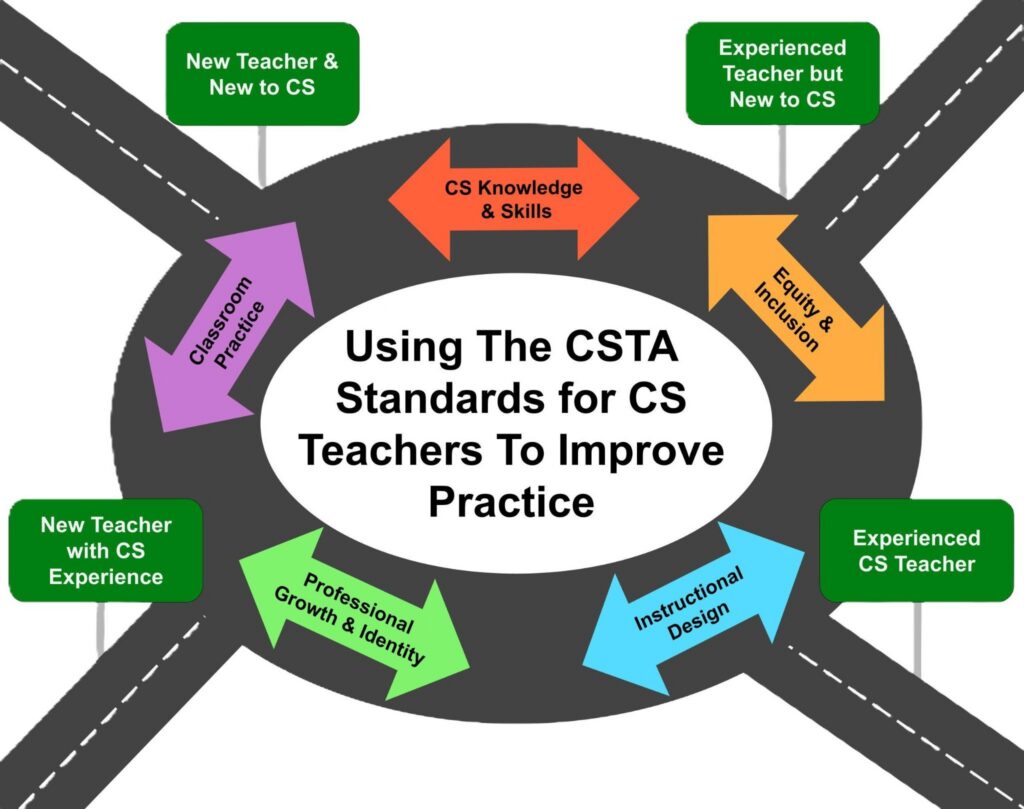
- Create their own Self-Reflection Worksheet based on their experience level (New Teacher and New to CS, New Teacher with CS Experience, Experienced Teacher but New to CS, and Experienced CS Teacher) as depicted on the Roadmap for Continuous Learning to reflect on their practice.
Module 2
Standard 1: CS Knowledge and Skills
- Identify the relationship between the K–12 Computer Science Framework, CSTA 2017 K-12 Standards, and Standard 1 of the CSTA Standards for CS Teachers.
- Evaluate their CS teaching practice regarding Standard 1 (CS Knowledge and Skills) using CSTA Self-Reflection Worksheet.
- Plan their own next steps to improve their CS teaching practice regarding Standard 1 CS Knowledge and Skills.
- Locate CSTA resources available for targeted professional learning.
Module 3
Standard 2: Equity and Inclusion
- Assess the importance of advocating for equal opportunities for all students in the CS classroom and how the Standard 2 indicators can help accomplish this.
- Evaluate their own practice regarding Standard 2 (Equity and Inclusion) using CSTA Self-Reflection Worksheet.
- Plan their own next steps to improve their own practice regarding Standard 2 Equity and Inclusion.
- Locate CSTA resources available for targeted professional learning.
Module 4
Standard 3: Professional Growth and Identity
- Recognize the importance of continuing to develop their knowledge, practice, and professional identity around CS and how the Standard 3 indicators can help to accomplish this.
- Evaluate their practice and professional identity regarding Standard 3 (Professional Growth and Identity) using the CSTA Self-Reflection Worksheet.
- Plan their next steps to improve their CS knowledge, practice, and professional identity.
- Locate relevant CSTA resources that are available for targeted professional learning.
Module 5
Standard 4: Instructional Design
- Assess the importance of continuing to develop their own knowledge, practice, and professional identity around CS and how the Standard 4 indicators can help them to accomplish this.
- Evaluate their own practice regarding Standard 4 (Instructional Design) using CSTA Self-Reflection Worksheet.
- Plan their own next steps to improve their own practice regarding Standard 4 Instructional Design.
- Locate relevant CSTA resources that are available for targeted professional learning.
Module 6
Standard 5: Classroom Practice
- Assess the importance of advocating for equal opportunities for all students in the CS classroom and how the Standard 5 indicators can help them to accomplish this.
- Evaluate their own practice regarding Standard 5 (Classroom Practice) using CSTA Self-Reflection Worksheet.
- Plan their own next steps to improve their own practice regarding Standard 5 Classroom Practice.
- Locate relevant CSTA resources that are available for targeted professional learning.
Module 7
Course Completion
- Identify the most critical professional learning goals for each standard.
- Prioritize the top two to three short-term professional learning goals.
- Make a plan to seek and obtain professional learning to help meet the goals.
The Reflective Teacher Working Group estimates that it will take approximately eight hours to complete the course.
CS Teachers, Enroll Now!
You can now enroll in the Coursera Course, Using The CSTA Standards for CS Teachers To Improve Practice. The course is FREE for CSTA members!
Upon completion of the course, the CS teacher will have a personalized professional learning plan stating achievable SMART (Specific, Measurable, Achievable, Relevant, and Time-Bound) goals to aid in their professional growth. For the educator, the SMART goals will focus on:
- What impact their goals will have on their performance and student performance
- What specific actions are necessary for the goals to be accomplished
- What types of resources and/or support they need to achieve their goals and how the resources/support will be provided
- How evidence will be collected to show implementation and impact
- How they will ultimately know if they accomplished the goals
How Else Might this Course be Used?
CSTA Chapters might consider completing the course as a chapter with each member completing the course individually with on-going discussions about each module at chapter meetings or asynchronously using the CSTA community. Additionally, CS teacher mentors and coaches might assist their mentees in the process of goal setting as they work through the course completing their Self-Reflection Worksheet. Faculty at colleges of education might also take advantage of the online course as they prepare future CS teachers to be practitioners who continually review and improve their craft as CS teachers.
Questions? Come Chat With Us at the Conference!
Be sure to check out our poster session, Reflectively Unpacking the CSTA Standards for CS Teachers To Improve Your Professional Practice, at the 2026 CSTA Annual Conference in New Orleans on July 14, 9:30–11:30 a.m. in the Exhibit Hall at Poster Table 6.
About the Authors
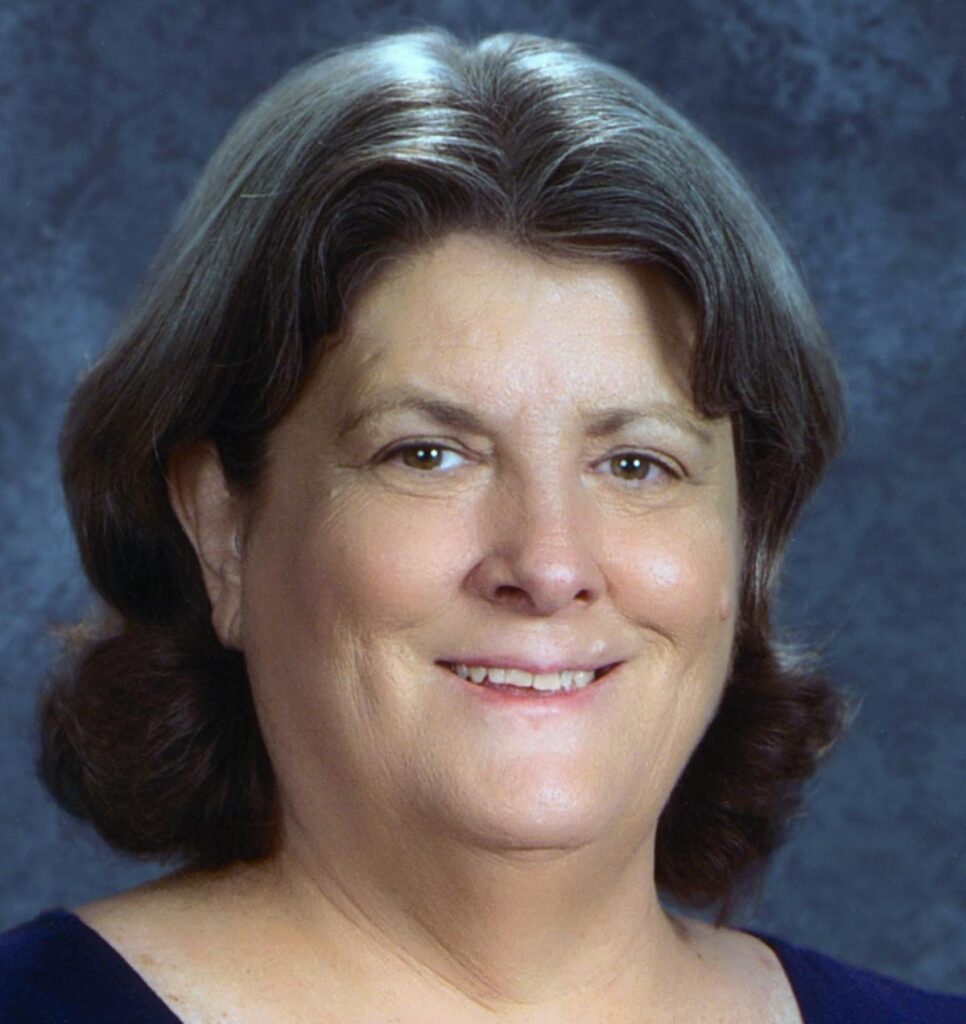
Vicky Sedgwick is a retired educator and the CSTA Greater Los Angeles Chapter President. She was a writer on the CSTA 2017 K-12 Standards and is the elementary lead on the CSTA 2026 K-12 Standards Revision, and was the K-2 Lead on the AI for K12 Initiative. Vicky was a writer on the CSTA Standards for CS Educators and has led the Reflective Teachers Working Group since 2019.

Deborah Seehorn retired as a Business, Finance, and IT Education Consultant at the North Carolina Department of Public Instruction. Prior to that, Deborah taught high school mathematics, computing, and business, as well as computing at the community college level. She served as the chair of the 2011 CSTA K-12 CS Standards, and co-chair of the 2017 CSTA K-12 CS Standards task force. Deborah was a co-lead on the CSTA Standards for CS Educators and has served on the Reflective Teachers Working Group since 2019. She also served on the CSTA Board of Directors as State Department Representative, and Chair.
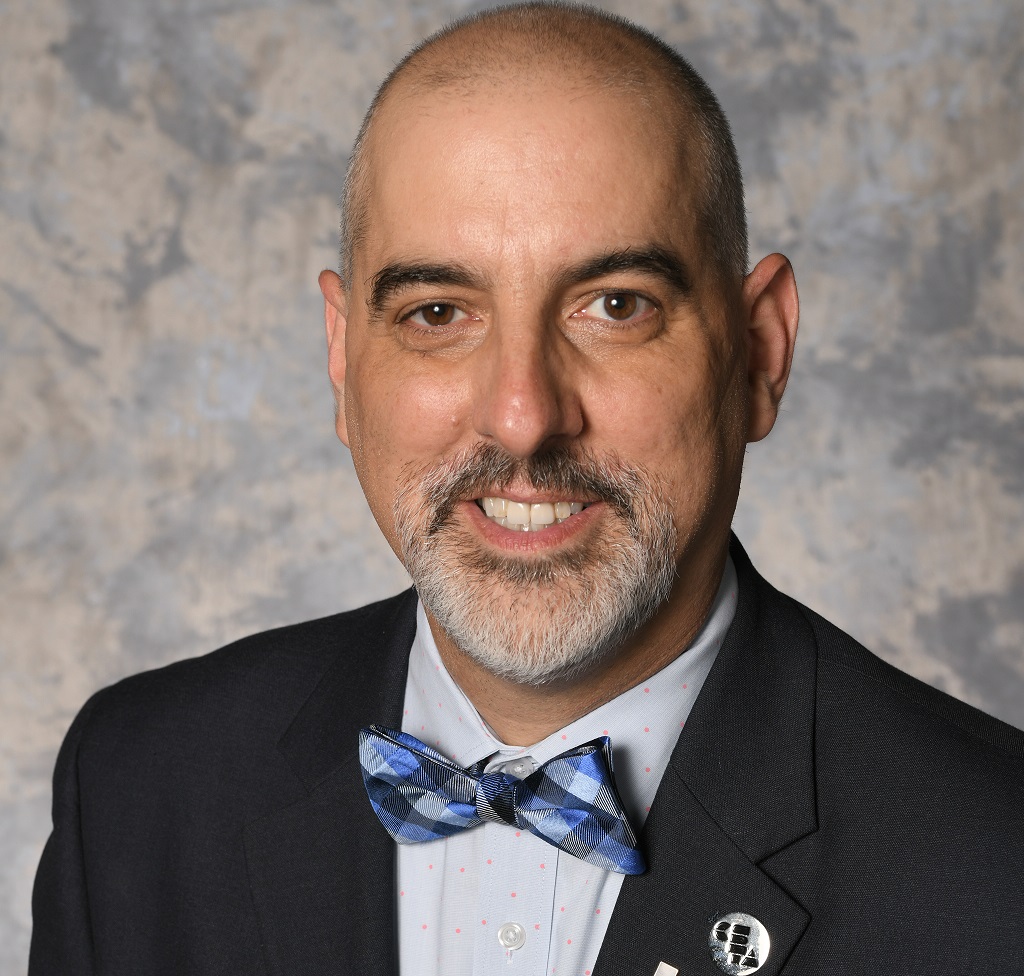
Dan Blier is the career and technical education coordinator for Plano Independent School District in Texas. He is a CSTA lifetime member, former chair of CSTA’s board of directors, and past president of CSTA Dallas Fort Worth. Dan has served on the CSTA Standards for CS Educators Reflective Teachers work group since 2019. Dan is the president of CS4TX and represents Texas in the Exploring Computing Education Pathways (ECEP) Alliance.
Works Cited
Fire up the Reflective Practitioners – NBPTS Main Site: https://www.nbpts.org/blog/2017/01/05/fire-up-the-reflective-practitioners/
CSTA Standards for CS Teachers: https://csteachers.org/reflective-teachers/
CSTA Guidance for Reflective Teachers: https://csteachers.org/reflective-teachers/
Online PD Courses – Computer Science Teachers Association: https://csteachers.org/pd-opportunities/online-pd/
SMART Goals:
https://www.ucop.edu/local-human-resources/_files/performance-appraisal/How+to+write+SMART+Goals+v2.pdf
2026 CSTA Annual Conference Agenda: https://conference.csteachers.org/event/CSTA2026/agenda?session=691b7350-2594-4f16-b437-204eab86d32b&shareLink=true