By Shilpa Agrawal, CSTA Responsible AI Fellow and Director of Computer Science at Comp Sci High
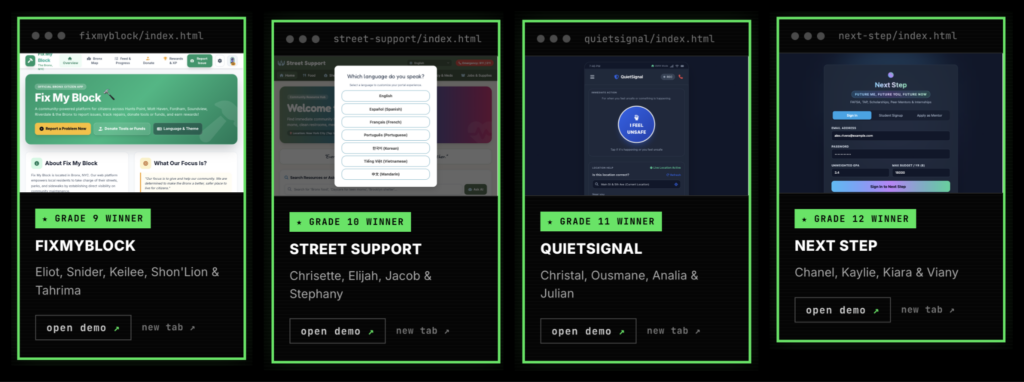
An app that sends your live location and an alert to the people you trust the moment you feel unsafe, and points you to the nearest well-lit public space at the same time.
An app that lets a resident photograph a pothole or a pile of illegal dumping on their block and route it straight to the people who can clear it.
An app that walks a student through FAFSA, matches them to scholarships they did not know existed, and pairs them with a peer mentor who has already been through it.
These are real apps that high school students at Comp Sci High, a public charter high school in the South Bronx, ideated, built, and pitched over the course of a single week.
The week was a design competition called AI for the People, and it brought all 535 of our students, from 9th through 12th grade, together into nearly one hundred teams for the same assignment: identify a real problem in our school or in the Bronx and build a working app, powered by AI, to help solve it. Over five days the teams moved from discovering a problem, to building a working product, to telling its story and pitching it live.
Nineteen teams advanced to grade-level finals in a packed gym, where one winner was named per grade: Fix My Block (report potholes, dumping, and street issues to the people who can fix them), Street Support (find nearby hot meals, shelter, and urgent services), QuietSignal (one-tap safety alerts that share your live location with trusted contacts), and Next Step (guidance through FAFSA, scholarships, and college matching). Students also voted their own People’s Choice awards to QuietSignal and Recyclean (join local cleanups and report dumping to earn rewards). The event drew coverage from News 12 the Bronx, which carried our students’ work to a citywide audience.
Comp Sci High runs a week-long design competition twice a year, and we do it because these weeks teach things a traditional class period rarely can. Students practice solving an open-ended, real-world problem, presenting their thinking to an audience, and working on a team under a real deadline, and they go deep into a skill they would not otherwise touch in their regular courses. We deliberately make each competition different from the last, so that over four years our students might wireframe a new ed-tech product, engineer a physical boat to hold the most weight, or write and deliver a TED-style talk. The content changes every time, but the posture we ask students to take stays the same. We want them to look closely at the world, design something that could improve it, and present their work to a room full of professionals.
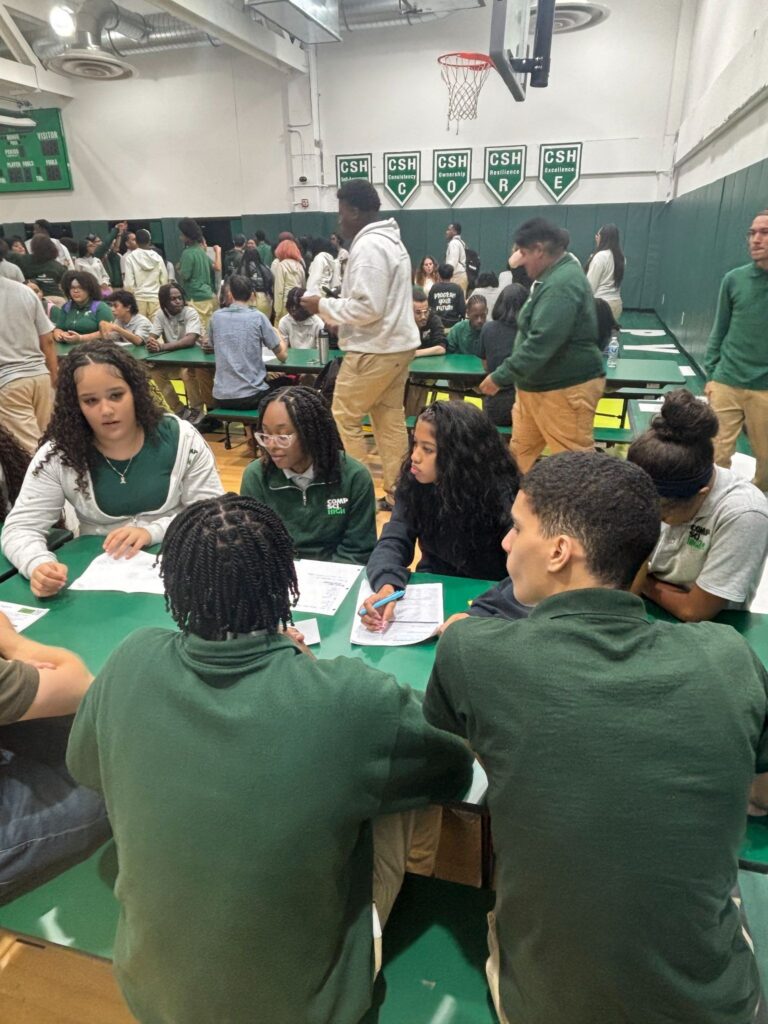
Given the world our students are stepping into, it was hard to imagine a more fitting theme than artificial intelligence (AI). At Comp Sci High we believe our students should be exposed to AI so they can move beyond being consumers of the technology and become the critical thinkers who ultimately help shape it. The week was designed to put the thinking before the tools.
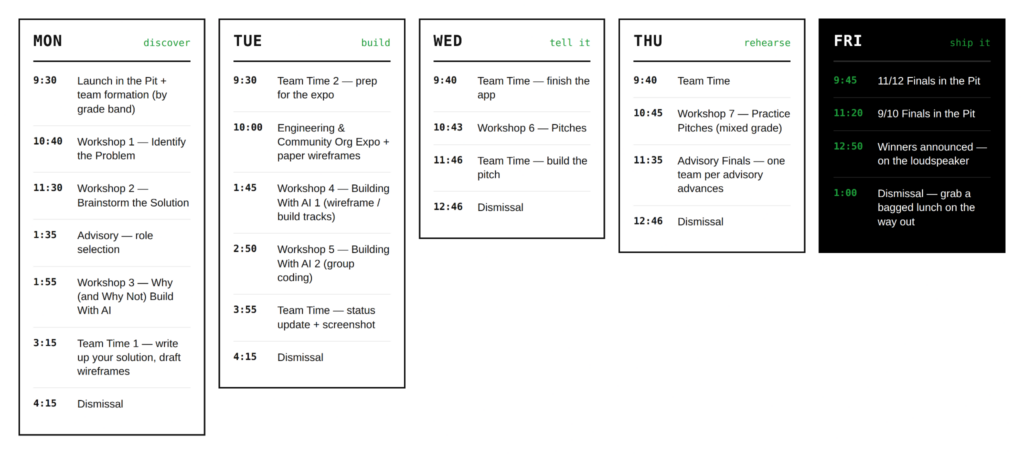
For the first two days, students worked without any technology at all. They used that time to brainstorm, vet, and sharpen the real problem they wanted to solve and to sketch wireframes for a solution on paper. Only once they had a problem worth solving and a clear design for addressing it were they taught how to leverage technology and AI to actually build it. Alongside the practical craft of building for the web with AI tools, students also sat in workshops that asked them to think carefully about the ethics of what they were using. Students weighed what these tools do well against their limits: when AI can be biased, when it can be unreliable, and when it is simply the wrong tool for the job.
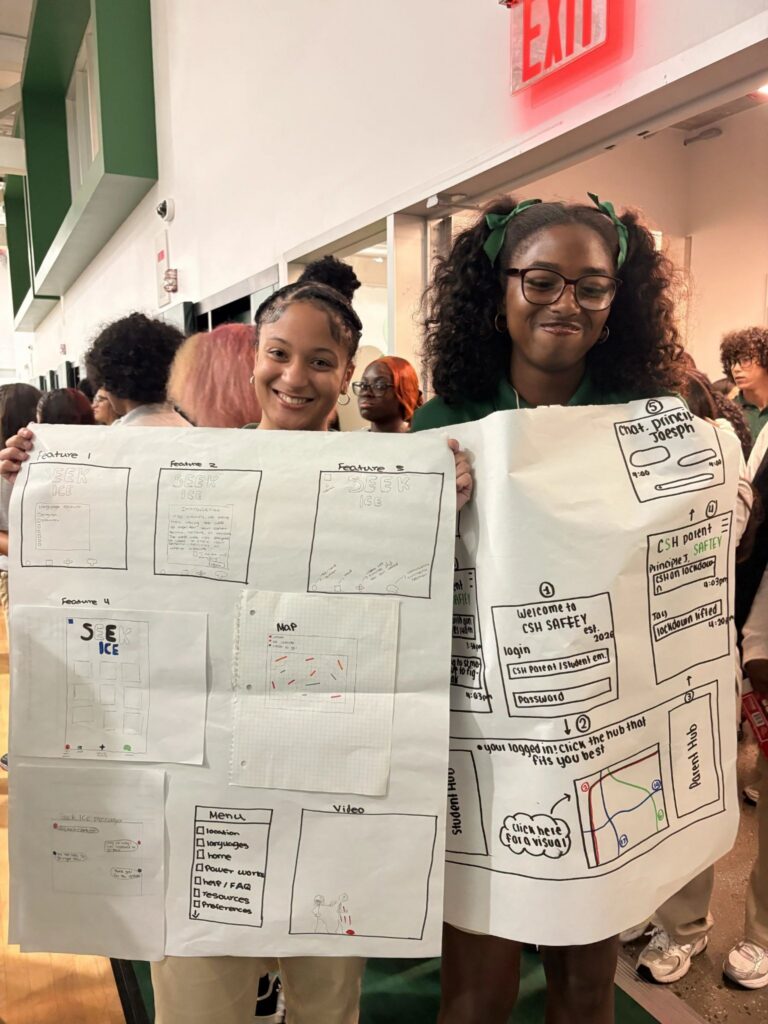
The week also opened the school to people from outside it. Roughly 65 volunteers joined across five days, including professionals from organizations such as OpenAI, Amazon, and Build First. These professionals worked alongside teams during an engineering and community expo and returned later to judge the finals. Their presence changed the stakes in a way we could not manufacture on our own. When a ninth grader explains an app to a working engineer and gets a real question back, the project stops feeling like a classroom assignment and starts behaving like a product, and students rise to meet that expectation.
We paused classes for a week to do school differently, and the return on that week showed up most clearly in our students themselves. They came away able to build something real with AI, but also more fluent in talking about the technology and more willing to name their concerns about it—which is exactly the kind of critical confidence we hope to grow. That confidence is already carrying forward; five of our teams are now continuing their work toward the Congressional App Challenge, the official app competition of the U.S. House of Representatives. Students are willingly taking on additional weeks of development, a pitch video, and a national submission on top of their full course load. They are doing it because, for one week, they got to be the people who build the tools rather than just use them, and they want to see how far their ideas can go.
About the Author
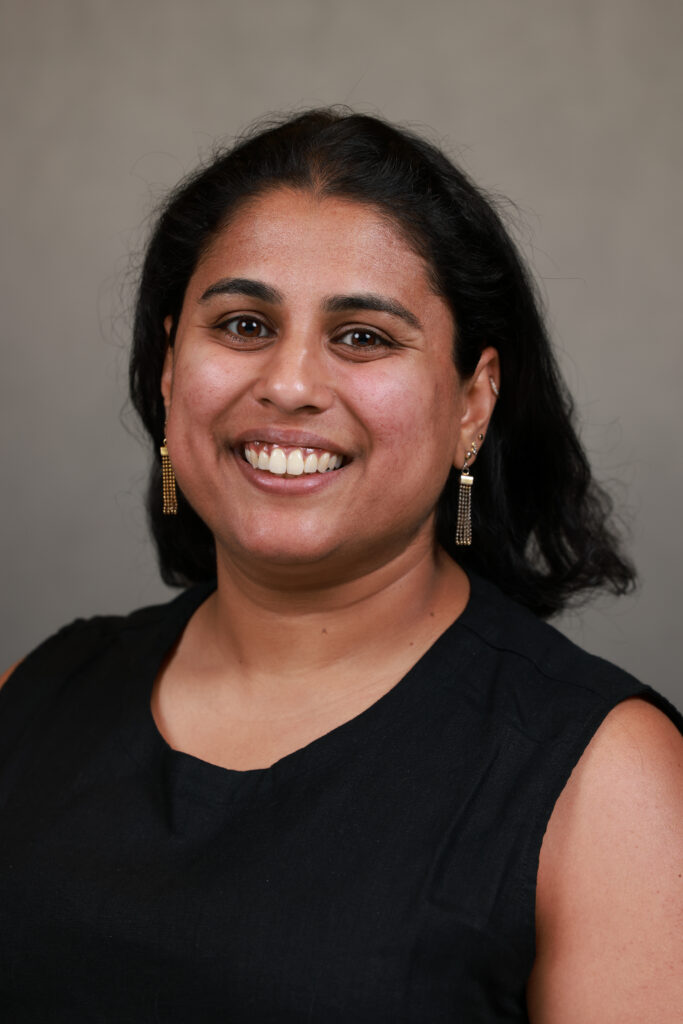
Shilpa Agrawal is a founding teacher of Comp Sci High, a charter school in the South Bronx. She currently serves as the Director of CS, coaching all the CS teachers in the school and overseeing the 4-year course progression. In her past 7 years at the school she has taught various classes including AP CSA, Software Engineering, AP Calculus, Intro to Physics, and AP Physics 1. Prior to teaching, Agrawal earned her Bachelor’s Degree in CS from MIT, and then worked at Google for 3 years as a Product Manager. She is passionate about teaching CS because the subjects allow students to discover through hands-on problem solving. She aims to help build a field of computing that not only accepts people with different backgrounds, but actively encourages them to bring their full selves to the table.