
The essay was good. That was the problem.
I assigned it on a Thursday in my Film and Multimedia class. The prompt was simple. Explain how media gets edited to make an audience believe something that isn’t quite real. Two weeks of class had gone into it. I brought the stack home that night and started reading, and then I picked up one that stopped me cold. Clean argument. Specific examples. The kind of confidence I don’t see often from an eighth grader.
I reached for my pen and froze. I read it again. Something was wrong, and it wasn’t the essay. It was me.
I started my career in special education, in self-contained classrooms with students the system had already decided were hard to reach. Then a year of high school biology. Then fifteen years of middle school science, where the answer means nothing without the process behind it. Then Film, Robotics, and Coding at a Title I school in Long Beach. That whole arc teaches you one thing if you pay attention. You learn to read the learner underneath the work. And I could not find a person anywhere in this one. No wrong turn that got fixed. No idea that surprised the writer. No sentence that cost anything to produce. A result with no process. A product with no human inside it.
I gave it a B-plus. Then I sat in a quiet room and understood that the grade was the smallest problem I had.
What the Machine Can’t Do
AI is a prediction machine. That’s not an insult, it’s a description. It completes patterns by guessing the most likely next word, and it does this with no stake in whether the result is true, fair, or yours. It wrote a flawless analysis of manipulation without understanding one thing it said.
Human judgment is a different animal. Reading a room. Making a call when the data runs out. Owning a decision you can’t take back. The machine has never done any of that, and it can’t. So my question stopped being “how do I catch AI” and became something harder. What am I actually teaching that a prediction machine can’t fake?
We Were Already Grading the Wrong Thing
Here’s the part that’s hard to sit with. The AI didn’t break my assignment. It exposed it.
My rubric rewarded clean structure, correct format, the expected output. Compliance, basically. I’d been calling that good writing for years, and a pattern machine did it better than most of my students overnight. Now follow that one more step. The skills my rubric rewarded, summarize the source and format the paragraph and produce the predicted answer, line up neatly with access. A quiet place to study. Books at home. A parent who edits. The students who never had those things scored lower, and we called it merit.
But the skills those same students built out of necessity, reading people and navigating uncertainty and making real calls with real stakes, are exactly what the machine can’t touch. School spent decades measuring the wrong thing and grading the wrong kids as gifted. AI just made the design flaw impossible to ignore. This isn’t a sob story and it isn’t a rescue. It’s an inversion. The students we counted out have been training for this moment without knowing it.
Designing for Judgment
So I rebuilt the work instead of banning the tool. Four moves do most of it.
Make it local. Anchor the task to something AI doesn’t have. A student’s block. A grandmother’s memory of a corner store that’s been three different businesses. The thing no database holds.
Make the thinking visible. Grade the trail, not just the product. The draft, the wrong turn, the redirect. A finished essay tells you nothing now. The process tells you everything.
Make it real-time. This is the move that changed my classroom. I put the work on the desk and ask the student to defend it out loud, with no AI in the room. A kid I’ll call Darius had been invisible all semester. Present every day, silent on every page. He couldn’t produce the polished essay. But give him ninety seconds to defend an argument live and he was the sharpest mind in the room. The machine can write the essay. It cannot show up to defend it.
Make it human. AI responds to you. A person can change you. That gap is the whole point of building work around real back-and-forth.
Thinking With AI, Not For It
Avoiding AI isn’t the answer either. A student who can only dodge the tool is as unprepared as one who hands it everything.
A student I’ll call Imani asked an AI about the history of her own neighborhood. It gave her a confident, organized, statistically tidy answer. It described a park two streets over as a community gathering space. She knew it had been closed for three years after a shooting. It called the businesses on the main corridor established local commerce. She knew which ones opened last year and which had been there since her grandmother moved in back in 1987.
She didn’t accept the answer. She didn’t avoid the tool. She corrected it. That’s the skill I actually have to teach, and it isn’t prompt tricks. It’s the habit of directing AI, interrogating what it hands back, and adding the lived knowledge it can’t reach. The machine defaults to a narrow frame. Western, educated, wealthy, the average of everything it ever read. Cultural-bias researchers, including Tao, Viberg, Baker, and Kizilcec in 2024, have mapped how that default plays out across models. The CSTA AI Learning Priorities for All K-12 Students (CSTA and AI4K12, 2025) name the broader problem of bias and unequal impact directly. A kid who can’t push back on that default gets her own community erased and told it’s correct. A kid who can is the human oversight every company deploying AI is hunting for right now.
Where This Leaves Us
I stopped blocking AI and stopped pretending it would go away. I redesigned the work. Literacy is the floor now. Judgment is the ceiling. Curate, don’t automate.
That first essay was technically perfect and completely empty. In a few years my students walk into a job market full of writing exactly like it, produced in seconds, by anyone. The thing that sets them apart will be the one thing the machine never had. They’ll have to mean it, and they’ll have to stand up and prove they do.
About the Author
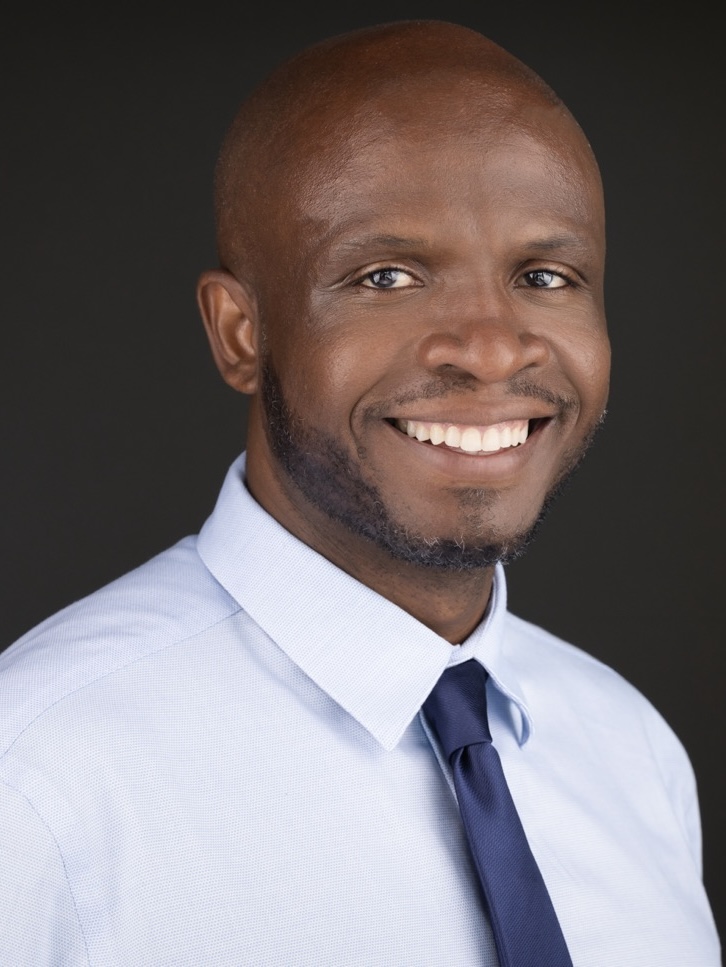
Tarquinn Curry is a veteran educator with 22 years of teaching experience in Long Beach Unified School District. He teaches film, robotics, and coding at Jefferson Leadership Academies and leads AI courses for BOSS, a nonprofit that empowers students of color through mentorship and technology. Tarquinn serves on both the State of California AI Task Force and the LBUSD AI District Task Force, helping shape equitable approaches to computer science and artificial intelligence in K–12 education. In 2025, he was recognized as an ASU+GSV AI Innovator for his leadership at the intersection of equity, technology, and learning. He holds a master’s degree in education and a preliminary administrative credential. Tarquinn also founded Silvereye Films LLC and Quinnsight, blending media, education, and AI consulting to expand opportunities for students, families, and communities.