
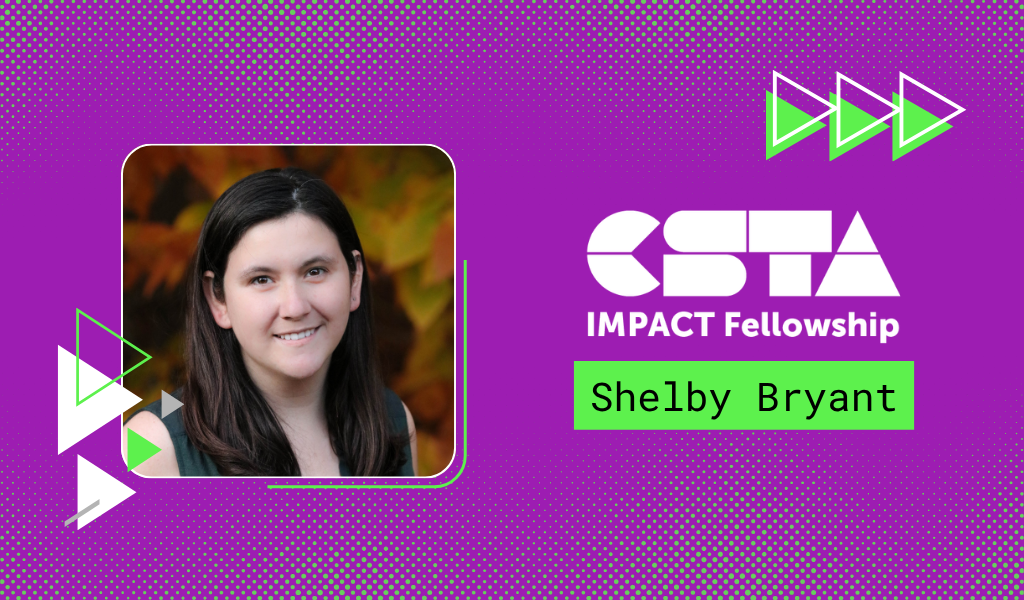
Shelby Bryant is an educator, program designer, and computer science advocate dedicated to expanding access to meaningful learning opportunities for all students. Throughout her career, she has worked alongside educators, community organizations, employers, and school districts to create inclusive pathways into computer science, particularly for students in rural and underserved communities.
Drawing on a background in the humanities, museum education, robotics, and digital liberal arts, Shelby brings an interdisciplinary perspective to computer science education. She has facilitated professional learning for educators, supported the development of K–12 computer science pathways, and helped design student-centered experiences that make computing accessible, engaging, and welcoming regardless of prior experience.
Her work has included supporting initiatives such as Girls Who Code summer camps, Teen Tech Night at the Maine Science Festival, and student participation in the Maine App Challenge. These programs focused on reducing barriers to participation while helping students build technical skills, confidence, and a sense of belonging in technology spaces.
Recognizing that expanding access to computer science requires collaboration across sectors, Shelby has worked with educators, school leaders, employers, and community partners to strengthen connections between classrooms and careers. Through workforce partnerships, mentorship opportunities, and career exploration experiences, she has helped students better understand the diverse opportunities available within technology-related fields.
Shelby believes that collaboration is most effective when it is responsive and community-driven. Her approach centers on listening to students, families, educators, and industry partners to design programs that meet local needs. This philosophy has guided efforts to adapt and improve initiatives over time, including expanding residential computer science experiences that increased access for students from rural communities by reducing transportation and technology barriers.
A systems-level thinker, Shelby is passionate about helping educators see computer science as a literacy that can be integrated across disciplines rather than confined to a single classroom. Her current work explores the intersections of computer science, leadership, history, museums, and the arts, with a particular interest in creating resources that help educators connect computational thinking to existing curriculum and community experiences.
As a CSTA IMPACT Fellow and educational leader, Shelby is committed to building sustainable, inclusive pathways that empower students, support educators, and strengthen communities. She is especially interested in fostering partnerships, developing innovative learning experiences, and helping more learners discover that they belong in computer science.
“I have been fortunate to have wonderful mentors who have guided me, and now I hope to create opportunities and pathways that help others discover their own potential.”